
Service
Tarmac Drivewaysin County Durham & TeessideStrong, Even, Ready to Use in Days
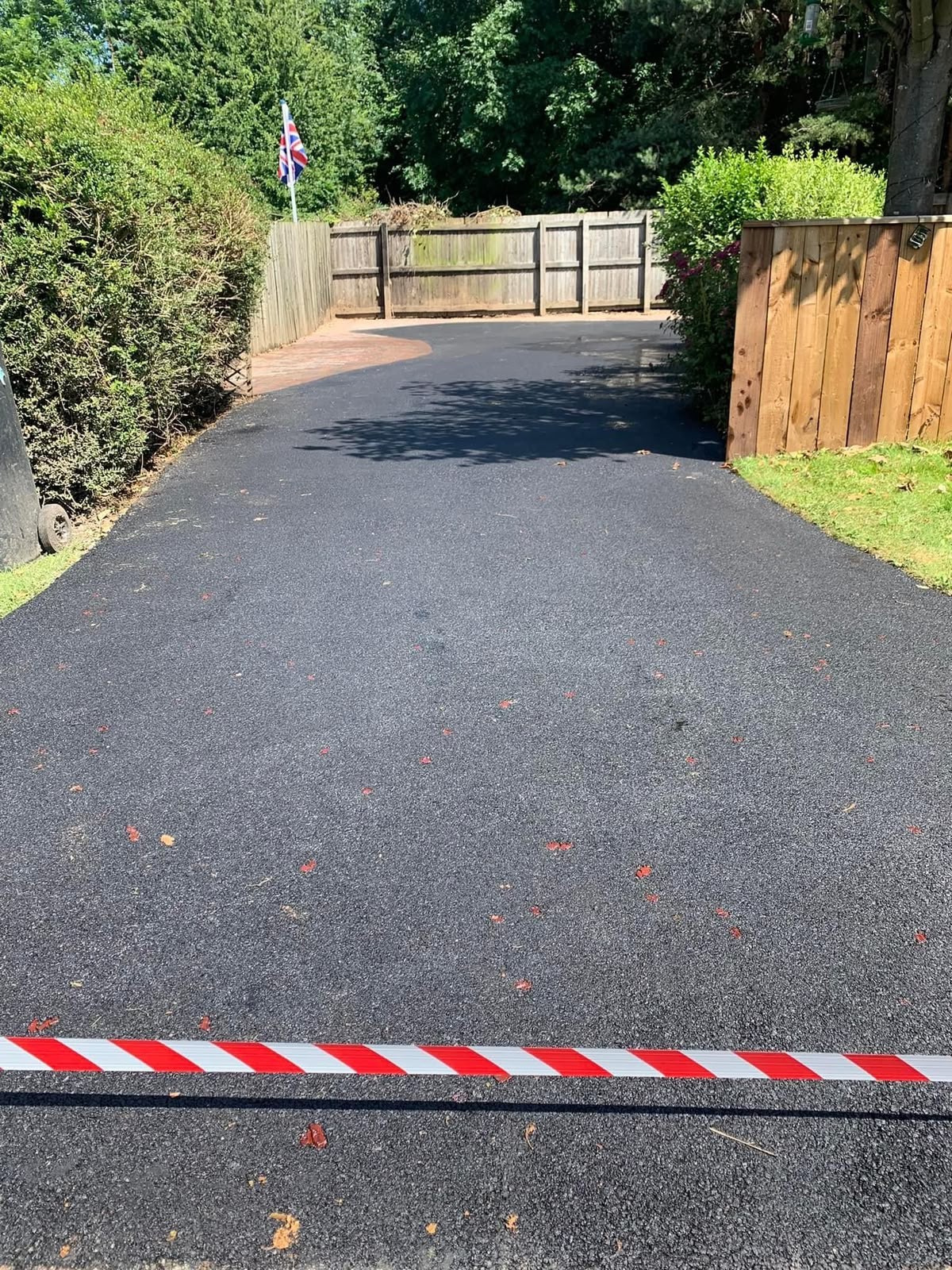
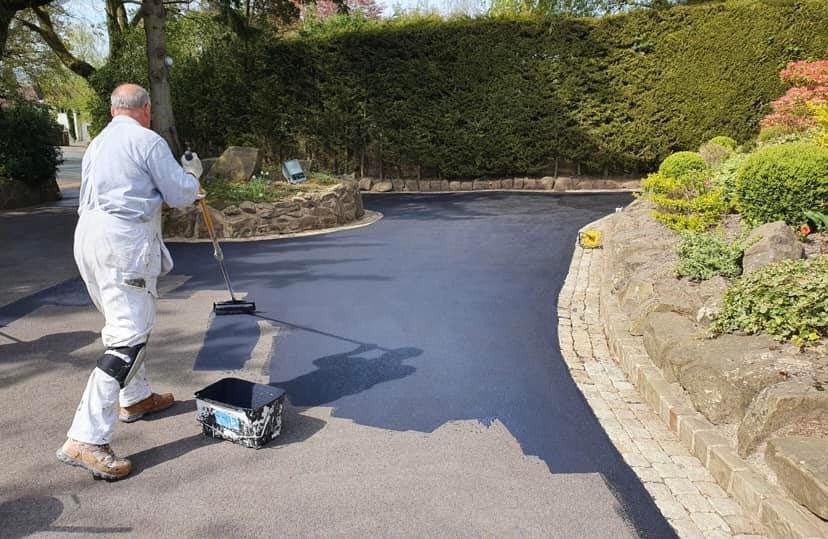
Machine-rolled tarmac driveways and access roads built on a compacted stone sub-base with base and wearing courses: the most economical way to surface a large area, installed in around 4 days and backed by a 5 year workmanship guarantee.
Free written quote, no obligation. 20 years' experience, £5 million public liability insurance, 5 year workmanship guarantee on every job.
- 20 years' experience
- £5m public liability
- 5 year workmanship guarantee
- Free written quotes
- Driveways typically 4 days
Tarmac driveways built through their full depth, not just on the surface
Tarmac remains the best value option for covering a large driveway, a shared access, a farm entrance or a commercial forecourt. Laid hot and rolled while still workable, it produces a dense, even surface that copes well with repeated vehicle turning, sheds water quickly once falls are set correctly, and is ready to use again far sooner than most alternative surfaces after installation.
The finished blacktop is only ever as good as the build-up beneath it. We excavate to the correct depth, lay and compact a stone sub-base in stages, and then lay the tarmac itself in a base course followed by a wearing course, so the strength runs through the full depth of the construction rather than sitting as a thin skin over ground that has not been properly prepared. Edges are formed and supported deliberately, because a tarmac edge with nothing holding it is where cracking and crumbling starts.
We lay tarmac driveways, access roads and forecourts across Darlington, Durham, Stockton, Northallerton, Newcastle, Hartlepool, Sunderland, Bishop Auckland and Richmond, and take on jobs from York up to Newcastle and across to Penrith. Every quote is a free, written price based on an actual site visit.
Based in Fishburn and working right across County Durham, Teesside and North Yorkshire. See recent projects or read how we work.
Who it's for
- Homeowners wanting a large, cost-effective driveway surface without individual unit costs adding up
- Farms and rural properties needing a durable, all-weather access road or yard
- Commercial premises requiring a forecourt or car park that copes with regular heavier traffic
- Anyone replacing a cracked, potholed or badly patched existing tarmac surface
- Shared or private access roads serving several properties that need a single, consistent surface
When it's usually needed
- Potholes, cracking or crazing have appeared across the surface, especially after winter frosts
- The edges of the driveway are crumbling away where they meet a lawn, kerb or border
- Water is pooling on the surface rather than running to a drain or soakaway
- You are extending an access road or forecourt to cope with more or larger vehicles
- An old, thin tarmac layer has worn through in patches, exposing the sub-base beneath
The cost of leaving it
What happens when tarmac is put off
Thin surfacing over an inadequate sub-base fails fast
Tarmac laid directly over soft or poorly compacted ground, without a proper stone sub-base underneath, will rut and crack within a season or two under regular vehicle weight, because the wearing course alone was never designed to carry structural load.
Unsupported edges crumble and spread every winter
The edge of a tarmac surface is its weakest point structurally. Without a kerb, block edging or properly compacted haunching to contain it, the edge breaks away under wheel loading and frost, and that damage works its way progressively further into the driveway each year.
Incorrect falls direct water where it does the most damage
If falls are not set out correctly during construction, water collects in low spots, softens the base beneath the tarmac over time, and can direct moisture towards a garage, house wall or neighbouring property rather than to a gully or soakaway.
Delaying repairs turns small cracks into structural potholes
A hairline crack lets water into the base layer beneath the tarmac. Left over a winter, freeze-thaw cycling widens that crack rapidly, and what could have been a simple seal or small patch becomes a full pothole needing structural repair.
Mistakes we're called out to fix
- - Accepting a quote that does not specify sub-base depth or whether a separate base and wearing course will be laid
- - Assuming all tarmac driveways are priced the same per square metre regardless of ground conditions or access for wagons
- - Skipping proper edge restraints to save cost, then paying for edge repairs within a couple of winters
- - Driving on new tarmac, parking with the wheels turned sharply, or dragging heavy items across it before it has fully hardened
- - Not checking whether existing drainage, gullies or soakaways are adequate for the new surface area before work starts
- - Choosing the cheapest quote without asking what thickness of base and wearing course is actually included
Our process
How your tarmac job runs, step by step
- 01
Step 1 – Site visit, measure-up and written quote
We assess ground conditions, access for tarmac wagons and rollers, existing drainage, and the intended use of the area, then provide a free, itemised written quote.
- 02
Step 2 – Excavation and sub-base preparation
The existing surface is excavated to the required depth, arisings are removed from site, and a compacted stone sub-base is built up in stages to give the finished surface a solid structural foundation.
- 03
Step 3 – Edge formation and support
Edges are formed against kerbs, block paved borders or properly compacted haunching so the finished tarmac edge is supported and resistant to cracking or spreading.
- 04
Step 4 – Base course laid and compacted
A base course of tarmac is laid hot and compacted with a roller, establishing the structural strength of the surface before the finishing layer goes on.
- 05
Step 5 – Wearing course laid, rolled and finished
The top wearing course is laid while the base is still warm where possible, rolled to a smooth, even finish, and falls are checked to confirm water runs correctly to drainage points.
- 06
Step 6 – Cooling, handover and usage guidance
The surface is left to cool and set, and we advise you on when it is safe to drive on, how to avoid wheel-turning damage in the first few weeks, and any final details before we leave site.
What you get
The difference a properly built job makes
Cost-effective for large areas
Tarmac remains the most economical way to surface a large driveway, access road or forecourt, without the per-unit costs that come with block paving or resin bound over the same area.
Fast to install, fast to use
A typical tarmac driveway is installed in around 4 days and is generally usable within around 24 hours of the final layer cooling, minimising disruption to daily vehicle access.
Strength through the full depth of the construction
Building a compacted stone sub-base and laying separate base and wearing courses gives the driveway genuine structural strength, not just a smooth top layer over soft ground.
Handles heavier and repeated vehicle use well
Properly built tarmac copes with regular turning, delivery vehicles and shared access traffic in a way that lighter-duty surfaces are not designed for.
Straightforward, cost-effective maintenance
Cracks and surface wear can usually be identified and repaired early and economically, provided they are addressed before water gets into the base beneath.
5 year workmanship guarantee as standard
Every tarmac installation is covered by our 5 year workmanship guarantee, alongside £5 million public liability insurance for the duration of the work.
Sub-base, base course and wearing course explained
A properly built tarmac driveway is constructed in distinct layers, each doing a different job. The compacted stone sub-base beneath everything provides load-bearing capacity and stops the tarmac above it flexing or cracking under vehicle weight; depth is adjusted to ground conditions, typically deeper on soft clay subgrades common across parts of County Durham than on naturally free-draining ground. On top of that sits the base course, a coarser, more open tarmac mix laid to establish the structural body of the surface, followed by the wearing course, a finer, denser mix that gives the smooth, weather-resistant finish you actually see and drive on.
Skipping the base course and laying wearing course tarmac directly over the sub-base is a common shortcut on cheaper jobs, and it produces a surface that looks acceptable initially but lacks the layered strength to resist rutting under repeated vehicle turning, particularly at the mouth of the driveway where most of the wear concentrates. We lay both courses as standard on driveway and access road work because it is the difference between a surface that lasts 15–20 years and one needing significant repair within 3–5.
Edge detailing: kerbs, block borders and haunching
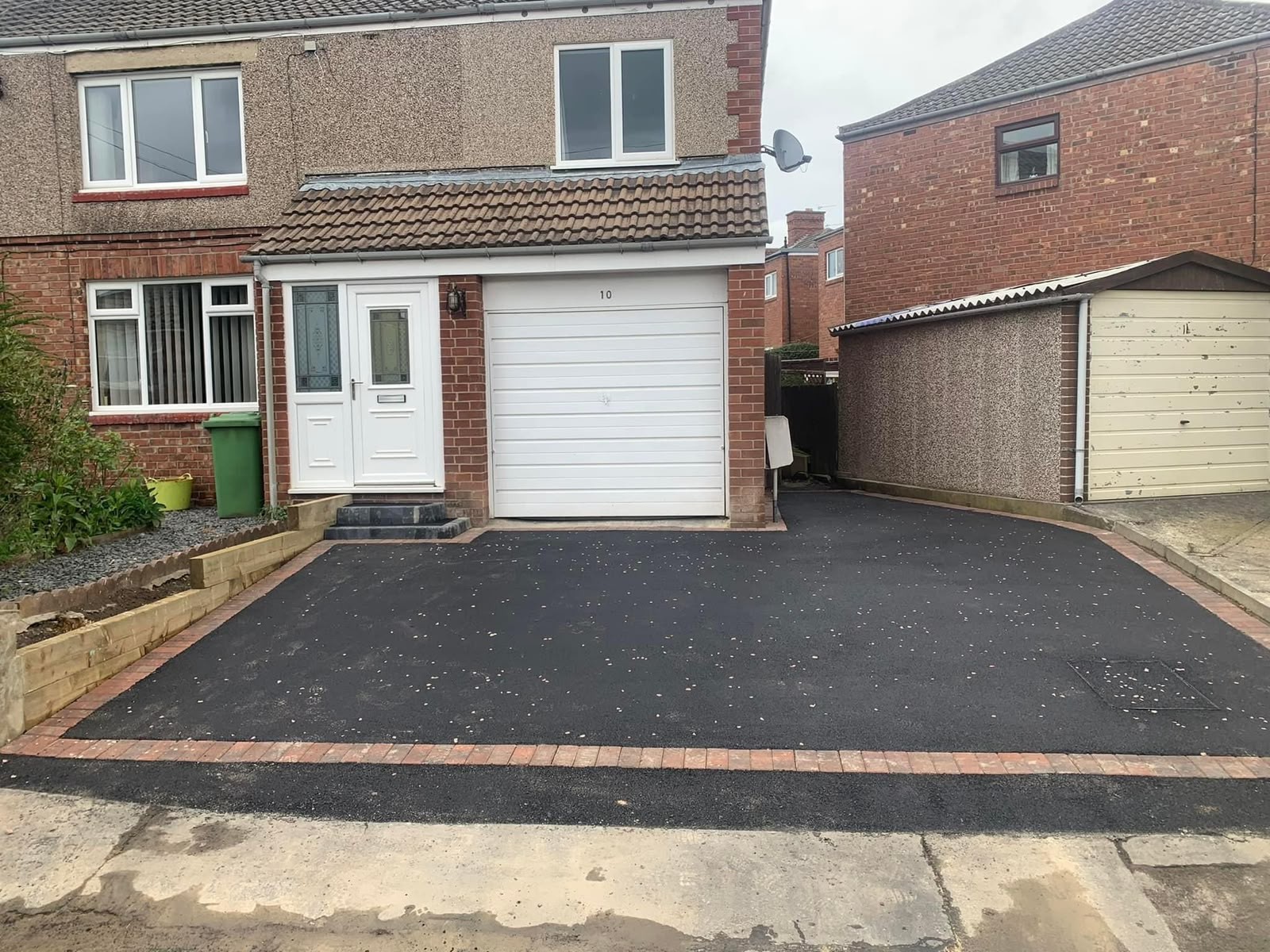
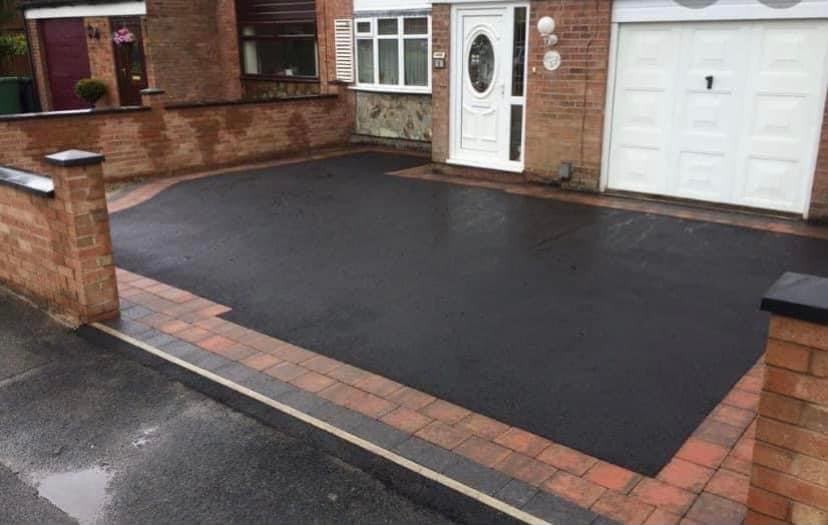
Because tarmac has no rigid restraint of its own, the edge of the surface needs deliberate support, otherwise it simply breaks away under the sideways pressure generated by tyres, especially during turning manoeuvres near garages and gateways. We form edges in one of three ways depending on the property and budget: against an existing or new kerb line, against a block paved border laid on its own concrete haunching, or using compacted concrete haunching directly beneath the tarmac edge itself. A block paved border is a popular middle option, since it frames the driveway visually, adds a contrasting finish, and provides genuine structural edge support at a modest addition to the overall cost.
Drainage, falls and surface water management
Falls across a tarmac driveway are set out during the sub-base stage using levels, so the finished surface directs rainwater towards a gully, channel drain or soakaway rather than pooling on the surface or running towards a building. Standard tarmac itself is impermeable, so where drainage capacity is limited or planning permeability requirements apply to a new area of hard standing, we can incorporate a soakaway, permeable edge strip or channel drain into the design rather than relying on the tarmac surface to manage water on its own. Getting this right at the design stage avoids the far more disruptive fix of retrofitting drainage into a finished surface later.
Residential driveways versus farm, commercial and shared access applications
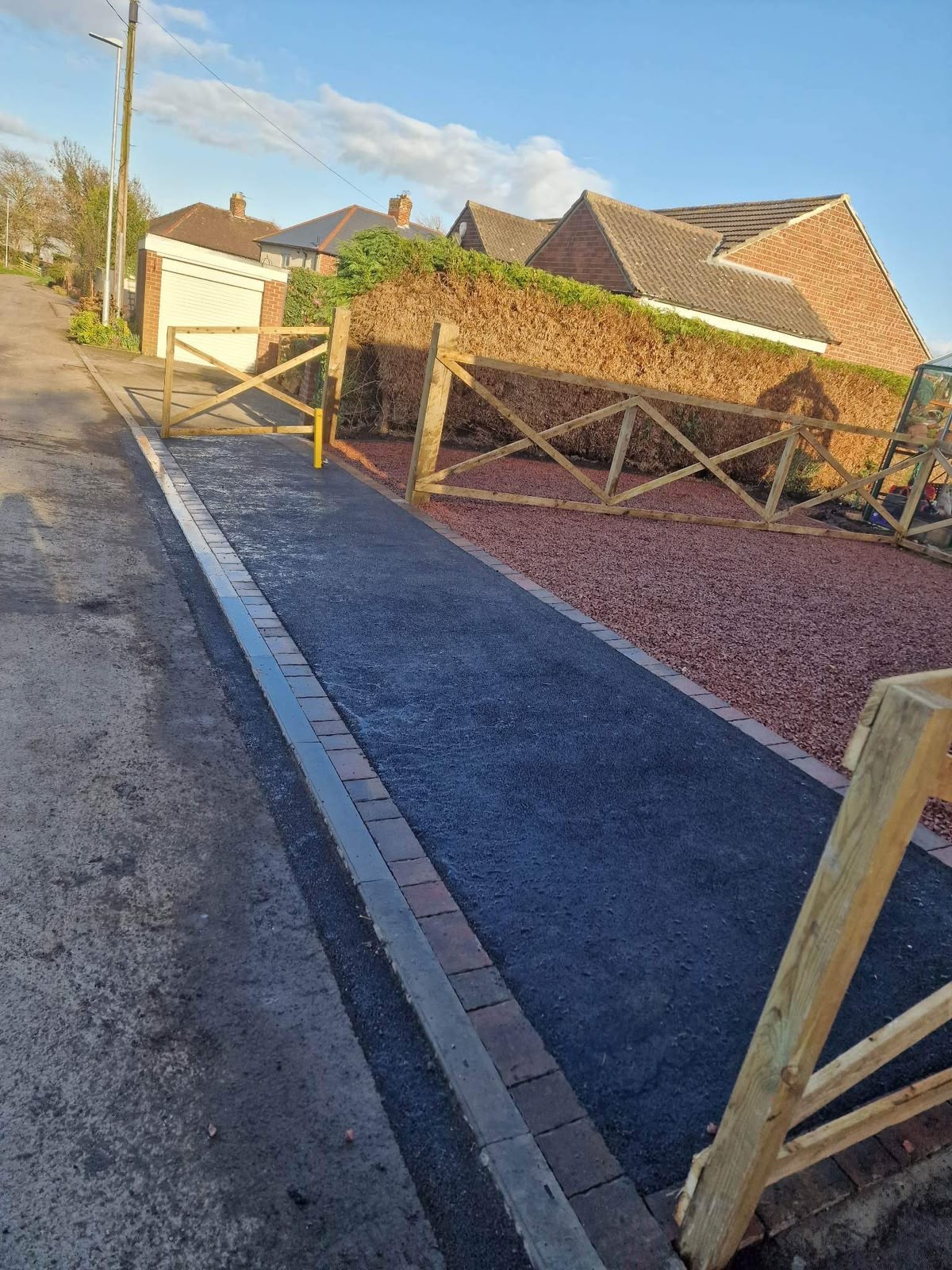
A domestic driveway is specified for car and occasional van loading, with sub-base and course thicknesses set accordingly. Farm access roads, commercial forecourts and shared accesses serving multiple properties see heavier and more frequent traffic, including delivery vehicles, and are built with a deeper sub-base and thicker base course to handle that loading without premature rutting. We assess the actual vehicles and frequency of use for each job: a shared access used daily by several households is a different specification to an occasional-use farm gateway, even though both might look similar on the surface once finished.
Straight answers
Tarmac questions
Get a free, written tarmac quote
Call 07909 773829 between 7am and 6pm, Monday to Saturday, or send us the details of your driveway or access road and we will arrange a visit. You will get a clear written quote with no obligation, and a 20% deposit secures your installation date.