
Service
Pattern Imprinted Concrete DrivewaysDarlington, Durham & StocktonStone Looks, Poured as One Slab
The appearance of stone, slate or cobbles poured as one continuous, reinforced slab, no joints for weeds, nothing to sink, nothing to spread, and a 5 year workmanship guarantee behind every metre.
Free written quote, no obligation. 20% deposit secures your date. £5 million public liability insurance and a 5 year workmanship guarantee on every job.
- 20 years' experience
- £5m public liability
- 5 year workmanship guarantee
- Free written quotes
- Driveways typically 4 days
Pattern imprinted concrete driveways built to last, not just to photograph well
Pattern imprinted concrete gives a driveway the look of natural stone, slate, cobbles or brickwork without laying a single individual unit. The whole area is poured as one continuous slab, coloured while wet, then stamped with textured mats before it cures. From the pavement it can be very hard to tell apart from real stone setts, but it behaves completely differently underfoot and underground, because there is only one surface, not thousands of small pieces held together by sand and hope.
That single-slab construction is the main reason homeowners across Darlington, Durham and Stockton choose it. There are no joints between units for weeds to seed into, nothing for a pressure washer to disturb, and no chance of individual blocks working loose or dipping under a wheel over time. The trade-off is that everything rides on getting the base, the reinforcement and the joint layout right before the concrete goes anywhere near the ground, because once it is poured and stamped there is no lifting a section to fix a mistake underneath it.
We have been laying pattern imprinted concrete across County Durham and North Yorkshire for over 20 years as a family-run business, and the driveways that have lasted are the ones where the groundwork was never rushed to save a day on site. That is the standard we build to on every job, whether it is a modest town house frontage in Stockton or a long sweeping drive out towards Richmond or Bishop Auckland.
Based in Fishburn and working right across County Durham, Teesside and North Yorkshire. See recent projects or read how we work.
Who it's for
- Homeowners who want the visual character of stone or cobbles without individual joints to maintain
- Period and character properties in County Durham and North Yorkshire where a natural stone look suits the setting
- Households wanting a driveway that is simple to keep clean, with no loose jointing sand to top up
- Anyone replacing a cracked or sinking concrete or tarmac drive who wants a decorative finish this time
- New build owners who want a driveway, path and porch threshold that all read as one continuous, coordinated surface
When it's usually needed
- An existing plain concrete or tarmac driveway has become tired, stained or cracked and needs replacing
- A new driveway is being installed as part of a build or extension and a decorative, low-joint finish is wanted
- Block paving has failed repeatedly through sinking or weed growth and a jointless alternative is preferred
- A period property needs a driveway finish that echoes stone or slate without the cost of real stone
- Standing water or poor falls on an old surface mean the whole build-up needs digging out and starting again
The cost of leaving it
What happens when pattern concrete is put off
Cracking from a thin or unreinforced base
Pattern imprinted concrete relies on a properly compacted sub-base and steel or fibre reinforcement to carry vehicle loads. Skimp on either and the slab can crack in random places rather than along the control joints designed to take the movement, leaving unsightly cracks running straight through a stamped pattern that cannot easily be hidden.
Colour fading and surface wear without sealing
The colour hardener and pattern sit in the top layer of the concrete, protected by a sealant coat. Left unsealed, or left too long between reseals, the surface loses its sheen, the colour dulls, and the textured pattern becomes more vulnerable to oil staining, de-icing salt damage and frost.
Standing water from incorrect falls
Because the surface is a single impermeable slab, all the water that lands on it has to run somewhere. If falls were not set out correctly before the pour, water pools in low spots, migrates towards the house, or freezes across the drive in winter, none of which can be corrected afterwards without breaking out and repouring the affected area.
Joint layout ignored to save time
Control joints are cut into the concrete deliberately to control where cracking happens as the slab expands and contracts. A rushed or poorly planned joint layout, or joints left out altogether, means any movement in the concrete happens randomly instead of in a planned, barely visible line.
Mistakes we're called out to fix
- - Choosing a contractor on stamped pattern choice alone without asking about sub-base depth or reinforcement
- - Skipping the sealant coat to save cost, then finding the colour and surface fade within a year or two
- - Assuming pattern imprinted concrete can be poured directly over old, cracked concrete without proper preparation
- - Not asking where control joints will be placed before the pour, then being surprised by visible joint lines later
- - Leaving a new slab open to vehicle traffic before it has properly cured
- - Ignoring falls and drainage in the excitement of choosing a stamp pattern and colour
Our process
How your pattern concrete job runs, step by step
- 01
Site visit, measure-up and free written quote
We come out, look at levels, access, existing drainage and any obstacles like manholes or steps, and talk through pattern and colour options. You get a clear written price with no obligation attached to it.
- 02
Excavation and waste removal
The existing surface, whether it is old concrete, tarmac, block paving or bare ground, is dug out to the correct depth and taken away, leaving a clean, level formation to build on.
- 03
Sub-base and reinforcement
A compacted stone sub-base is laid and rolled in the layers the ground needs, with steel mesh or fibre reinforcement placed through the slab to carry the loads a driveway sees day to day.
- 04
Pour, colour and imprint
Concrete is poured to the correct depth, colour hardener is worked into the surface, and textured mats are pressed in while the concrete is still workable to create the chosen stone, slate or brick pattern.
- 05
Control joints and curing
Control joints are cut into the slab at planned intervals so any future movement is directed into a barely visible line rather than a random crack, and the concrete is left to cure properly before it takes any weight.
- 06
Clean, seal and handover
Once cured, the surface is cleaned down and a protective sealant is applied to bring out the colour and guard against oil, salt and general wear, before we walk the finished drive through with you.
What you get
The difference a properly built job makes
No joints for weeds
A single continuous slab leaves nowhere for weed seed to establish between units, unlike block paving where jointing sand needs regular topping up.
Stone and slate looks without the cost or upkeep of real stone
Pattern imprinted concrete gives the visual warmth of natural materials while remaining a single, manageable surface to clean and maintain.
Nothing to sink or spread
Because there are no individual units, there is nothing that can rock loose, sink under a wheel, or drift out of line the way block paving occasionally can without proper edging.
Wide choice of colours and patterns
From ashlar slate to cobble and herringbone brick effects, colours and patterns can be matched to a property's brickwork, roof tiles or existing paving.
5 year workmanship guarantee
Every driveway we lay, including pattern imprinted concrete, carries a 5 year guarantee, backed by £5 million public liability insurance while we are on site.
Straightforward long-term maintenance
Routine care is a sweep, an occasional wash down and a reseal every few years, with no jointing sand, no loose stone and no individual units to relay.
How the base build-up affects the finished surface
The stamped, coloured surface is the part everyone sees, but the sub-base underneath it decides whether the driveway is still flat and crack-free in ten years. We excavate to a depth that reflects the ground conditions and the loads the drive will see, whether that is a family car on firm clay in Darlington or a heavier vehicle turning on softer ground out towards the Durham dales. The stone sub-base is laid and compacted in layers rather than dumped in one go, because a loosely compacted base settles unevenly under the concrete above it.
Reinforcement is placed through the slab, either as steel mesh or fibre mixed through the concrete itself, to hold the material together under tension as it expands and contracts with the seasons. Combined with a correctly compacted sub-base, this is what stops random cracking appearing across a stamped pattern years after installation, which is far harder to disguise than a crack in a plain grey drive.
Colour, imprint patterns and how the surface is finished
Colour is introduced in two stages: a colour hardener worked into the surface as the concrete is poured, and a release agent used during stamping that leaves a contrasting shade in the texture lines, giving the finished pattern depth rather than a flat, single-tone look. Popular choices across County Durham and North Yorkshire include slate grey, buff sandstone tones and traditional brick red, chosen to complement the brickwork or stonework of the property.
Patterns range from large-format ashlar slate slabs through to smaller cobble and herringbone brick effects, and the pattern can be run in a single field or combined with a border in a contrasting colour or pattern to frame the driveway. Once cured, the surface is cleaned and a sealant applied, which deepens the colour, adds a slight sheen and forms the protective layer against oil, tyre marks and de-icing salt that gets topped up every few years rather than the concrete itself needing attention.
Control joints, cracking and long-term durability
Concrete moves slightly with temperature and moisture regardless of how well it is laid, and control joints are cut into the slab at planned intervals to make sure that movement happens along an intentional, barely visible line rather than as a random crack through the middle of the stamped pattern. Joint spacing and placement are worked out before the pour, usually following natural breaks like garage doors, thresholds or changes in direction, so they read as a deliberate part of the design rather than a repair.
Provided the base, reinforcement and joints are all done properly, a pattern imprinted concrete driveway is one of the more durable decorative surfaces available, holding up well under regular family vehicle use, occasional heavier deliveries, and the freeze-thaw cycles that County Durham winters bring. The main long-term task is reapplying sealant every few years, which is straightforward and protects the investment made in the base construction.
Where pattern imprinted concrete works best
It suits driveways where a decorative, low-maintenance finish is wanted without the individual joints of block paving, and works particularly well on period properties around Richmond and Bishop Auckland where a stone-effect surface complements the existing stonework, as well as on new builds across Darlington, Stockton and Newcastle where a crisp, uniform finish is the priority. It is less suited to areas where regular excavation for utilities is expected, since repairing a section of a single poured slab is more visible than lifting and relaying a handful of paving blocks.
We lay pattern imprinted concrete on jobs from York up through Newcastle and across to Penrith, and we will tell you honestly if your site or ground conditions suit a different surface better, rather than fitting the job to the product.
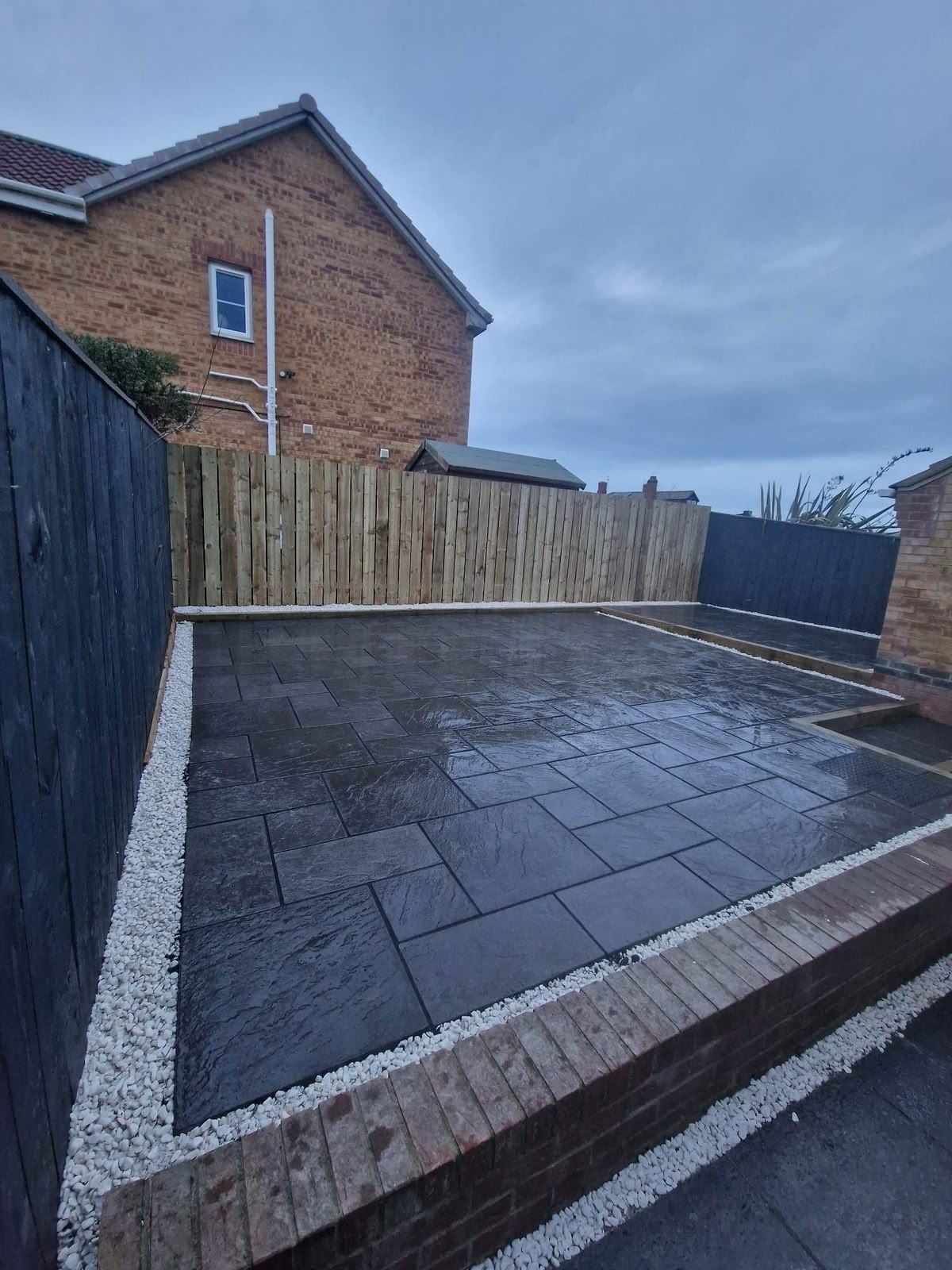
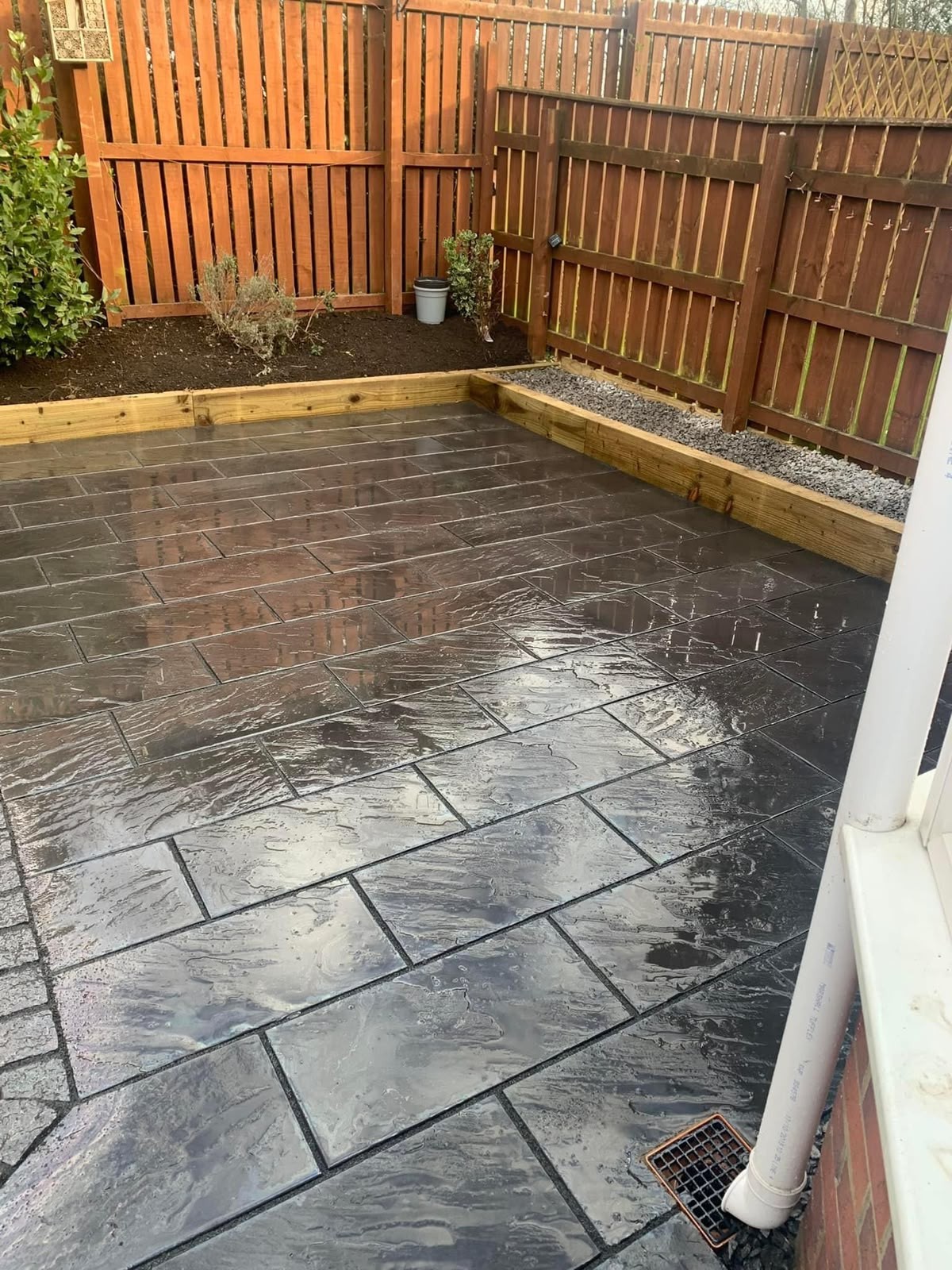
Pattern Concrete across the North East
Straight answers
Pattern Concrete questions
Get a free, written quote for your pattern imprinted concrete driveway
We cover Darlington, Durham, Stockton, Northallerton, Newcastle, Hartlepool, Sunderland, Bishop Auckland and Richmond, with jobs completed from York up to Newcastle and across to Penrith. Call 07909 773829, 7am to 6pm Monday to Saturday, or send details through and we will arrange a visit, measure up and send a clear written quote with no obligation.