
Service
Block Paving Drivewaysin Darlington, Durham & StocktonBuilt to Last, Not Just Look Good on Day One
A block paved driveway laid on a properly excavated, compacted sub-base with haunched edge restraints, installed in around 4 days, backed by a 5 year workmanship guarantee, and quoted for free before you commit to anything.
Free written quote, no obligation. 20 years laying driveways across County Durham and Teesside, £5 million public liability insurance, 5 year workmanship guarantee.
- 20 years' experience
- £5m public liability
- 5 year workmanship guarantee
- Free written quotes
- Driveways typically 4 days
Block paving driveways done properly, from the ground up
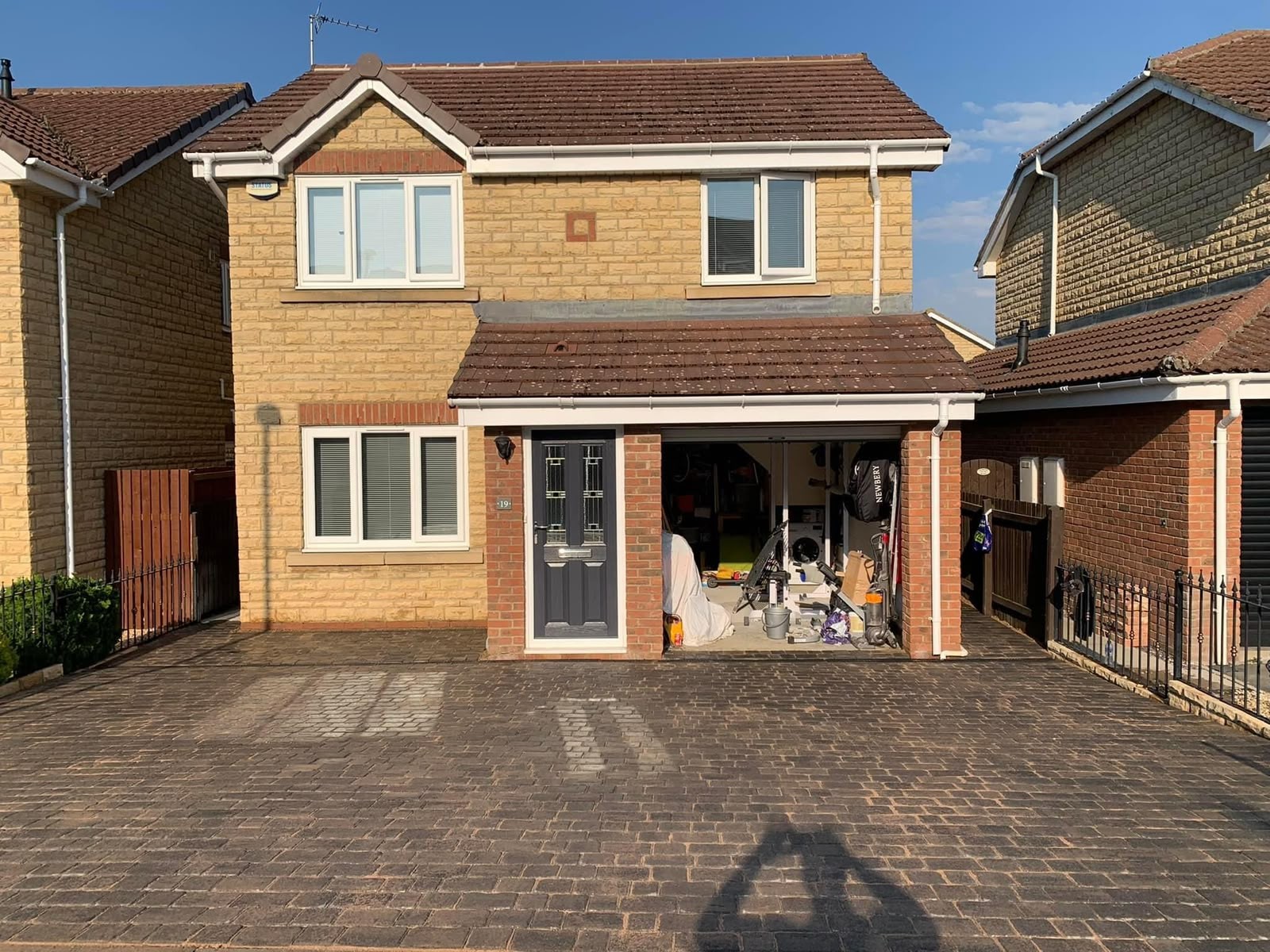
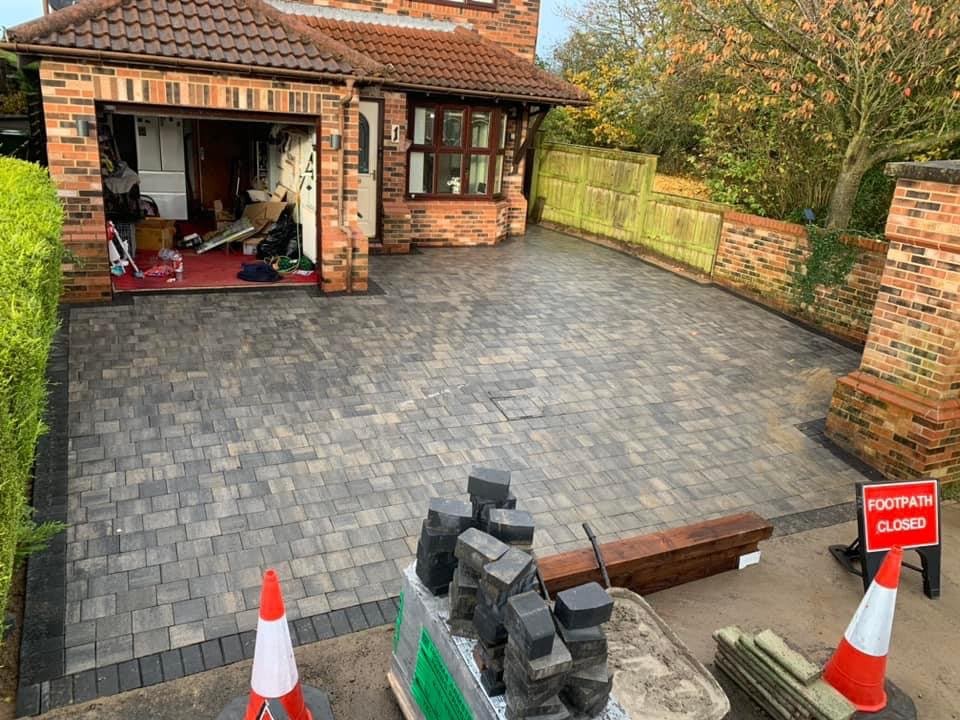
Block paving is still the most requested driveway surface we lay across Darlington, Durham and Stockton, and it earns that popularity honestly. Individual blocks handle vehicle weight and repeated turning without the whole surface cracking, they can be lifted and relaid if a drain or cable ever needs reaching underneath, and the range of colours, block formats and laying patterns means a scheme can be pulled together for a 1990s semi in Newton Aycliffe just as easily as a stone-fronted farmhouse near Richmond.
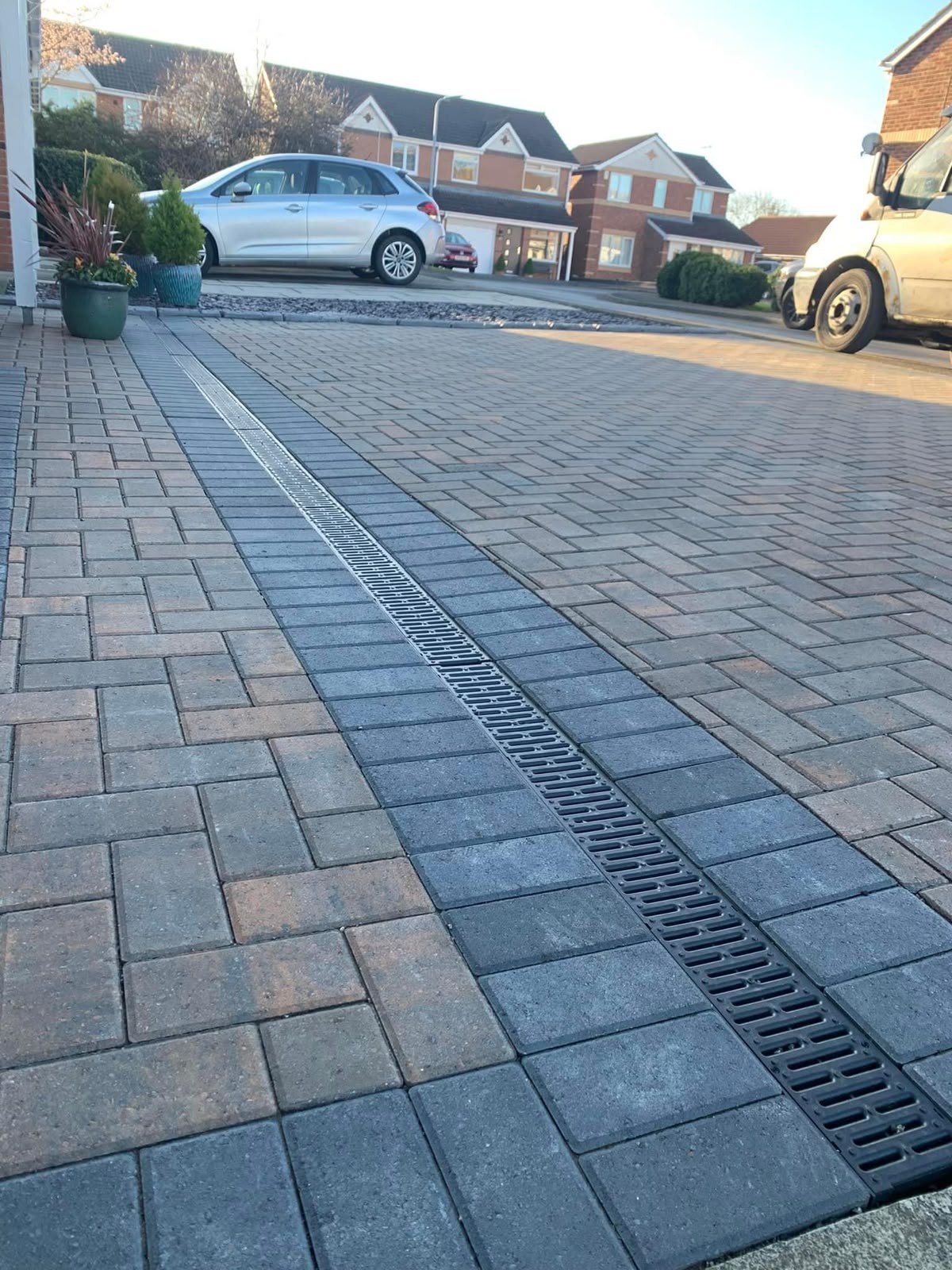
What decides whether a block driveway still sits flat and tight in fifteen years' time has almost nothing to do with the blocks themselves and everything to do with what goes on beneath them. We excavate to a depth that matches the ground conditions and the use the driveway will get, build the sub-base up in compacted layers rather than dumping stone in one pass, and install haunched concrete edge restraints along every boundary so the blocks have nowhere to creep outwards under load. Surface falls are set out before a single block is cut, so rainwater runs to a gully, soakaway or permeable joint rather than pooling by the front door or running towards the house.
We work across Darlington, Durham, Stockton, Northallerton, Newcastle, Hartlepool, Sunderland, Bishop Auckland and Richmond, with jobs taking us from York up to Newcastle and across to Penrith. Every quote is written, free, and based on an actual site visit and measure-up rather than a guess over the phone.
Based in Fishburn and working right across County Durham, Teesside and North Yorkshire. See recent projects or read how we work.
Who it's for
- Homeowners replacing a cracked, sunken or weed-choked existing driveway
- New build owners with a bare sub-base or builder's hardcore left at the front of the house
- Anyone wanting a defined parking area with a specific pattern, border or colour scheme
- Properties on clay or poorly draining ground where a robust sub-base matters more than usual
- Households planning to combine a new driveway with a path, patio or step detail as one project
When it's usually needed
- Individual blocks are rocking, sinking or have visibly dropped below the surrounding surface
- Weeds are established in the joints and standard sweeping no longer controls them
- Standing water collects in puddles rather than draining away after rain
- The existing edge restraint has failed and blocks are spreading outward at the perimeter
- You are extending or reshaping a driveway to fit an additional car or a turning area
The cost of leaving it
What happens when block paving is put off
Sub-base failure spreads quietly, then all at once
A thin or poorly compacted sub-base does not fail on day one. It settles unevenly under repeated vehicle loading over a year or two, and by the time you notice dips and rocking blocks, a large section usually needs lifting and rebuilding rather than a simple patch repair.
Missing or weak edge restraints let the whole drive migrate
Block paving relies on confinement: every block pushes against its neighbour, and the outer blocks push against the edge restraint. Without a properly haunched concrete edge, that outward pressure gradually spreads the blocks apart, opening gaps that widen every winter as water gets in and freezes.
Poor falls send water towards the house, not away from it
A driveway laid without correctly calculated falls can direct rainwater against a threshold or garage door rather than to a drain. Left unaddressed, that repeated wetting contributes to damp problems and, over a longer period, can undermine foundations at the point where water consistently collects.
Delaying jointing sand top-ups accelerates wear
Kiln dried sand in the joints locks the blocks together and stops them chattering under wheel loads. Once joints run empty, blocks lose that lateral support, edges chip faster, and the surface starts to move underfoot and under tyre in a way it was never designed to.
Mistakes we're called out to fix
- - Accepting a quote with no mention of excavation depth or sub-base specification: the finish is only as good as what is underneath it
- - Choosing a laying pattern purely on appearance without considering how it performs under vehicle turning circles at the mouth of the driveway
- - Skipping edge restraints, or having them poured as a thin unhaunched strip that will not resist lateral spread
- - Ignoring existing drainage and falls, then wondering why water pools by the front door after the first heavy rain
- - Assuming all block paving costs the same regardless of access: a driveway that needs materials barrowed round the back of a house costs more in labour than one with direct wagon access
- - Not asking what happens to the excavated spoil: removal and tipping fees are real costs that should be in the quote, not added afterwards
Our process
How your block paving job runs, step by step
- 01
Step 1 – Site visit, measure-up and written quote
We come to you, measure the area accurately, check access for materials and machinery, discuss block choice, pattern and border options, and put together a written, itemised quote at no cost and with no obligation to proceed.
- 02
Step 2 – Excavation and spoil removal
Once you confirm the date, we excavate the existing surface and subsoil to the required depth, load and remove all arisings from site, leaving a clean, level formation ready for the sub-base.
- 03
Step 3 – Sub-base construction in compacted layers
MOT type 1 or an equivalent graded stone is laid and compacted in stages using a vibrating plate or roller, not dumped and driven over once. This is the single biggest factor in how long the driveway lasts.
- 04
Step 4 - Edge restraints and falls set out
Haunched concrete edge restraints are installed along every boundary edge, and the correct falls are set using string lines and levels so surface water runs to the intended drainage point.
- 05
Step 5 - Laying, cutting and compaction
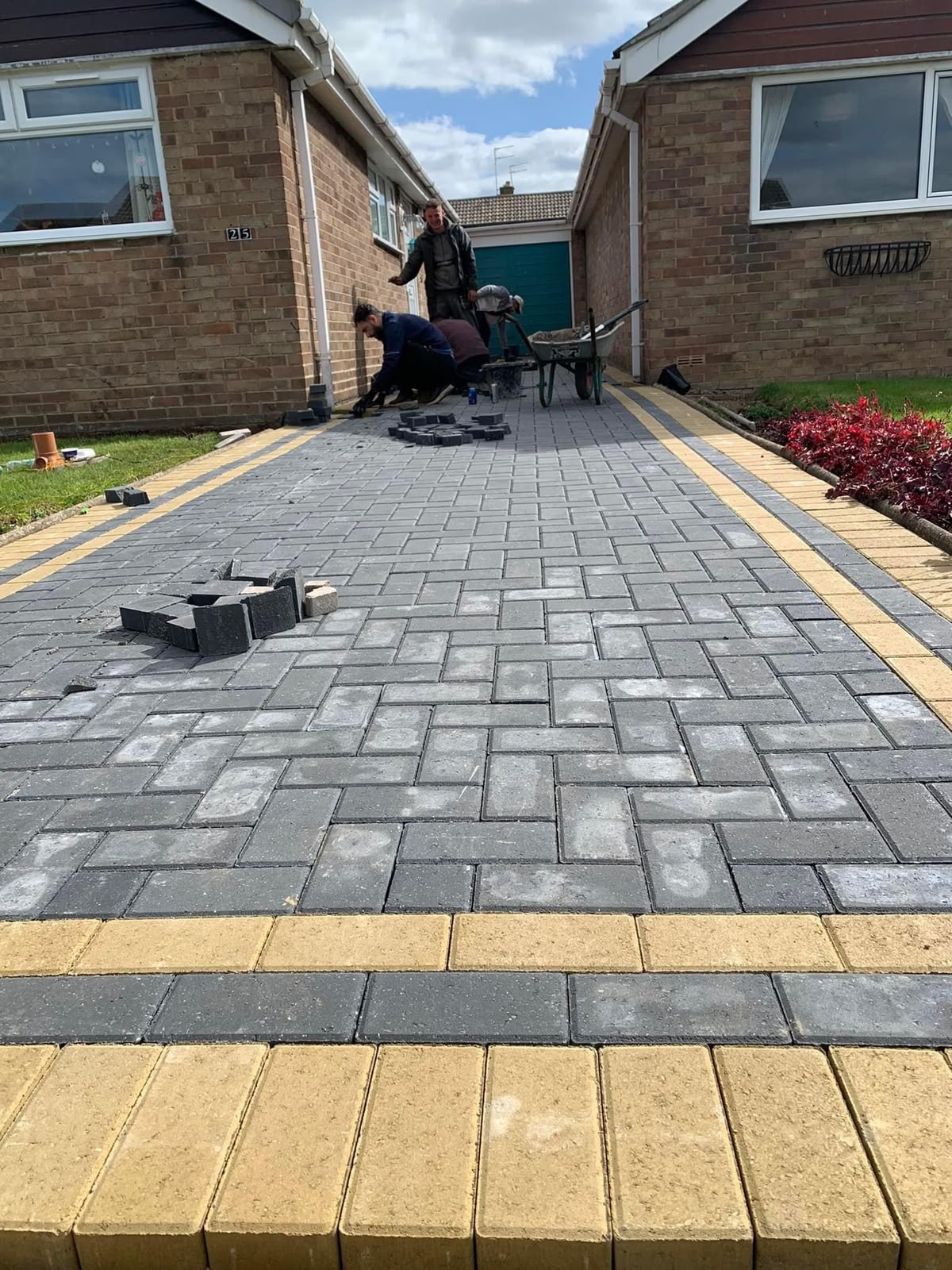
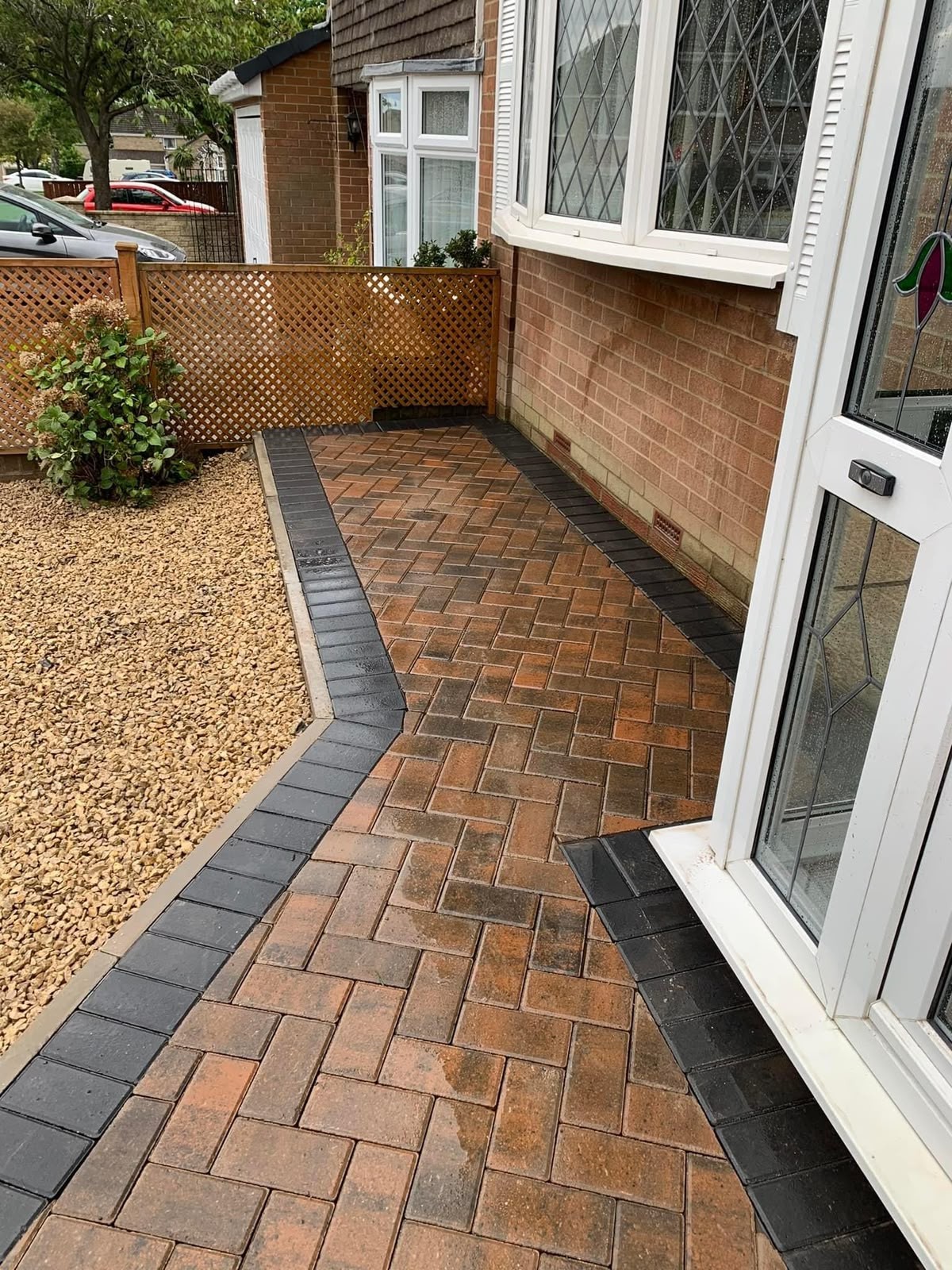
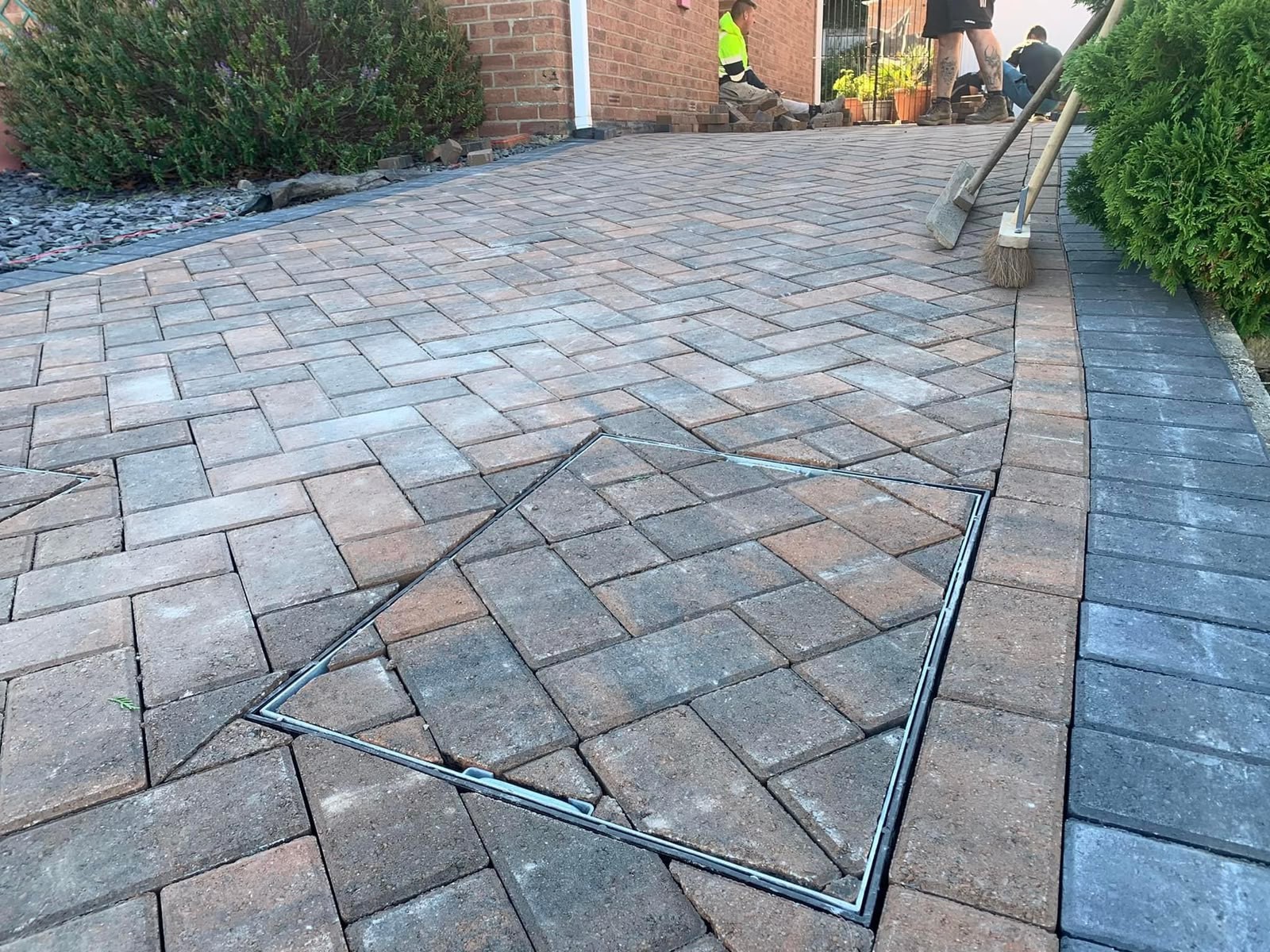
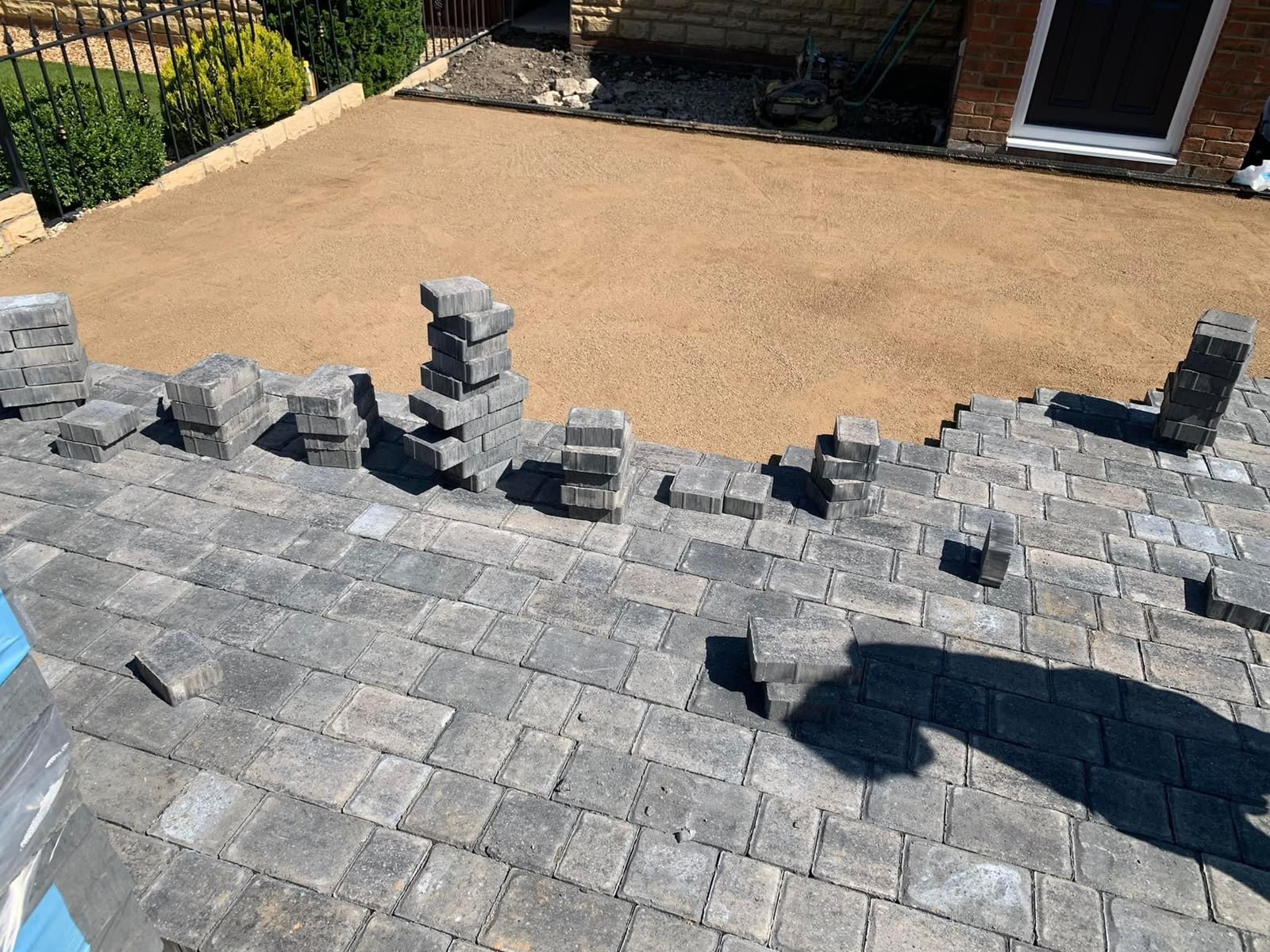
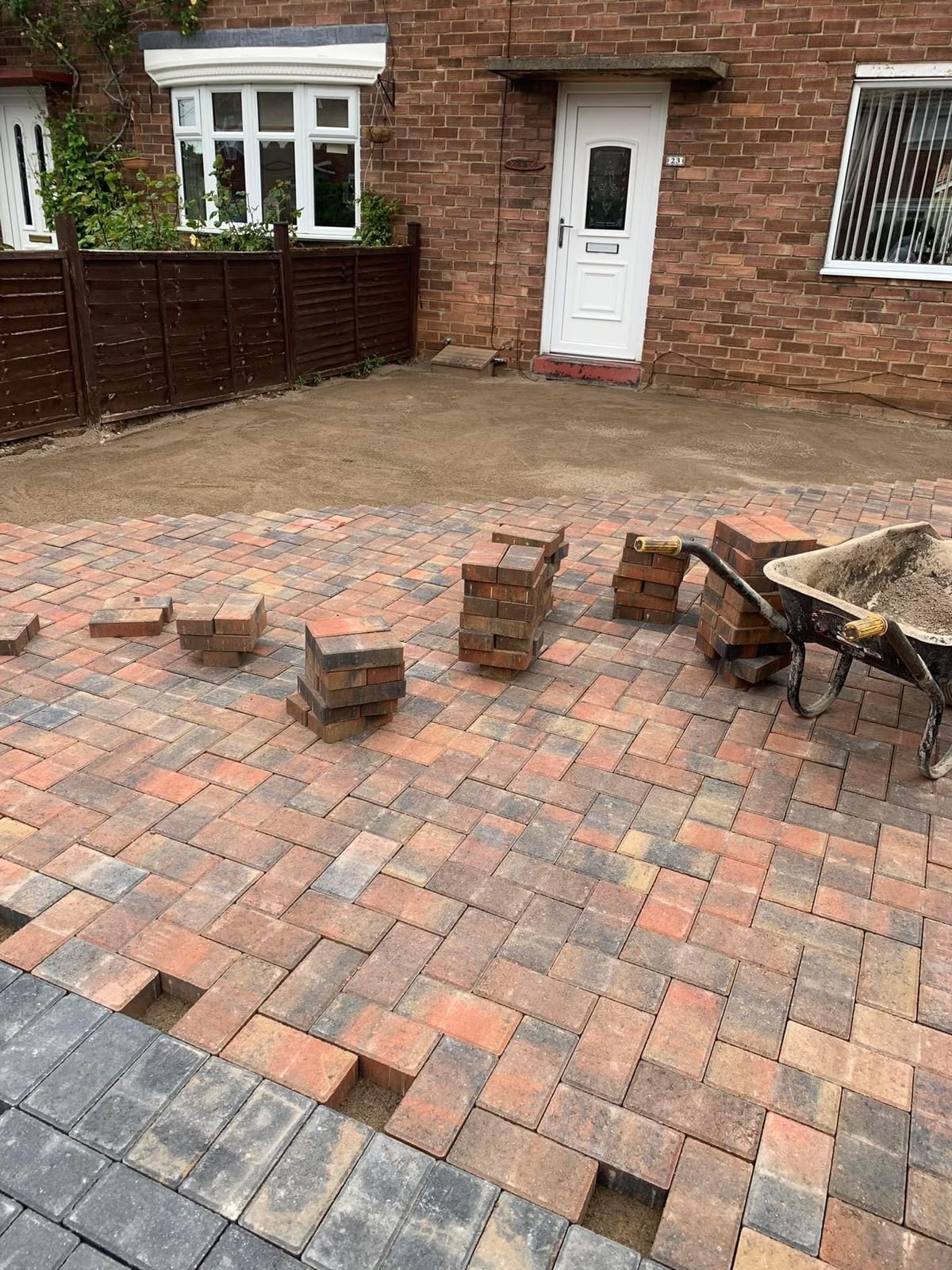
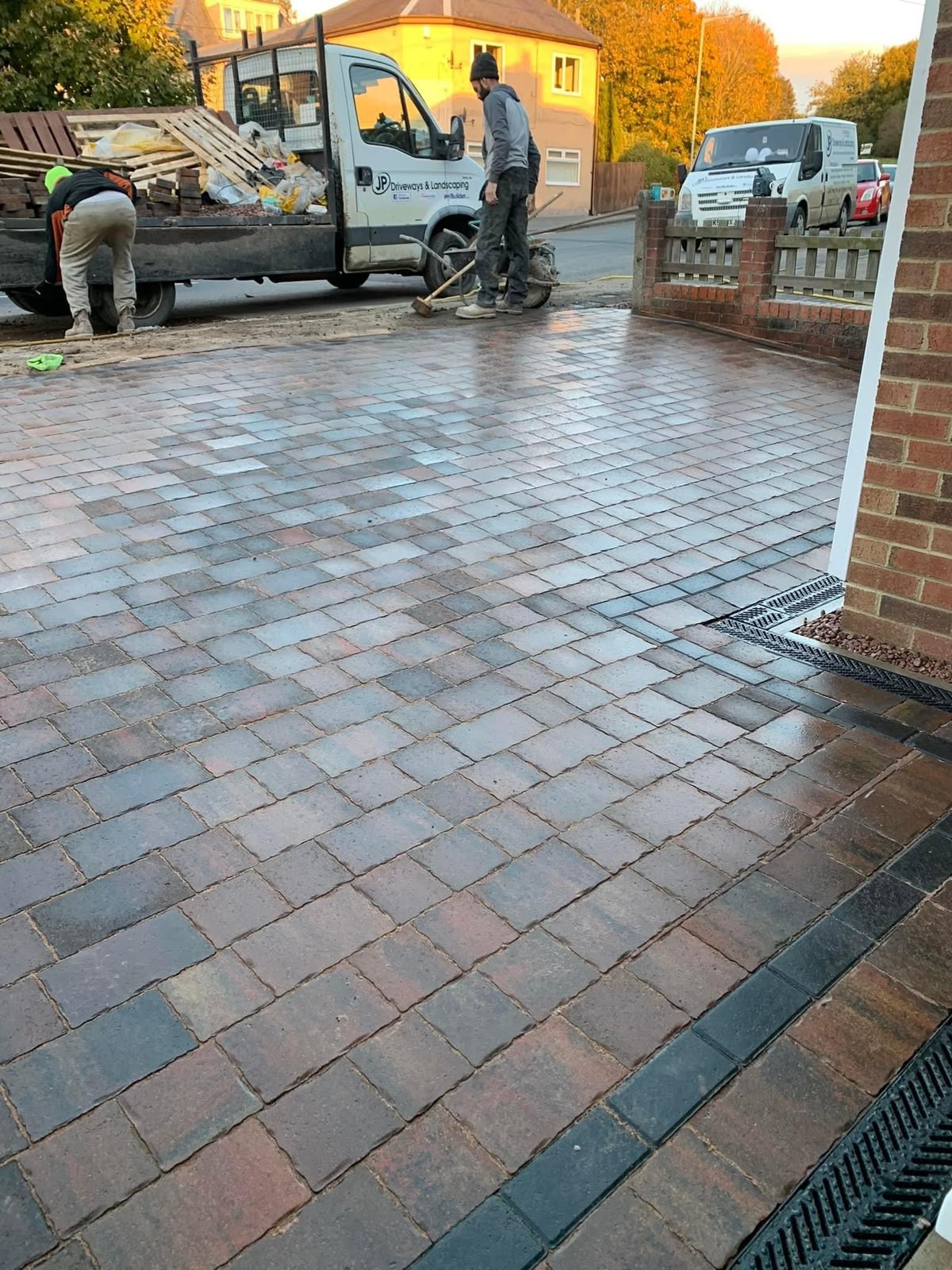
Blocks are laid to the agreed pattern, cut neatly around manholes, thresholds and curves, then vibrated into a bed of grit sand so every block sits flush and true.
- 06
Step 6 – Jointing sand, clean-down and handover
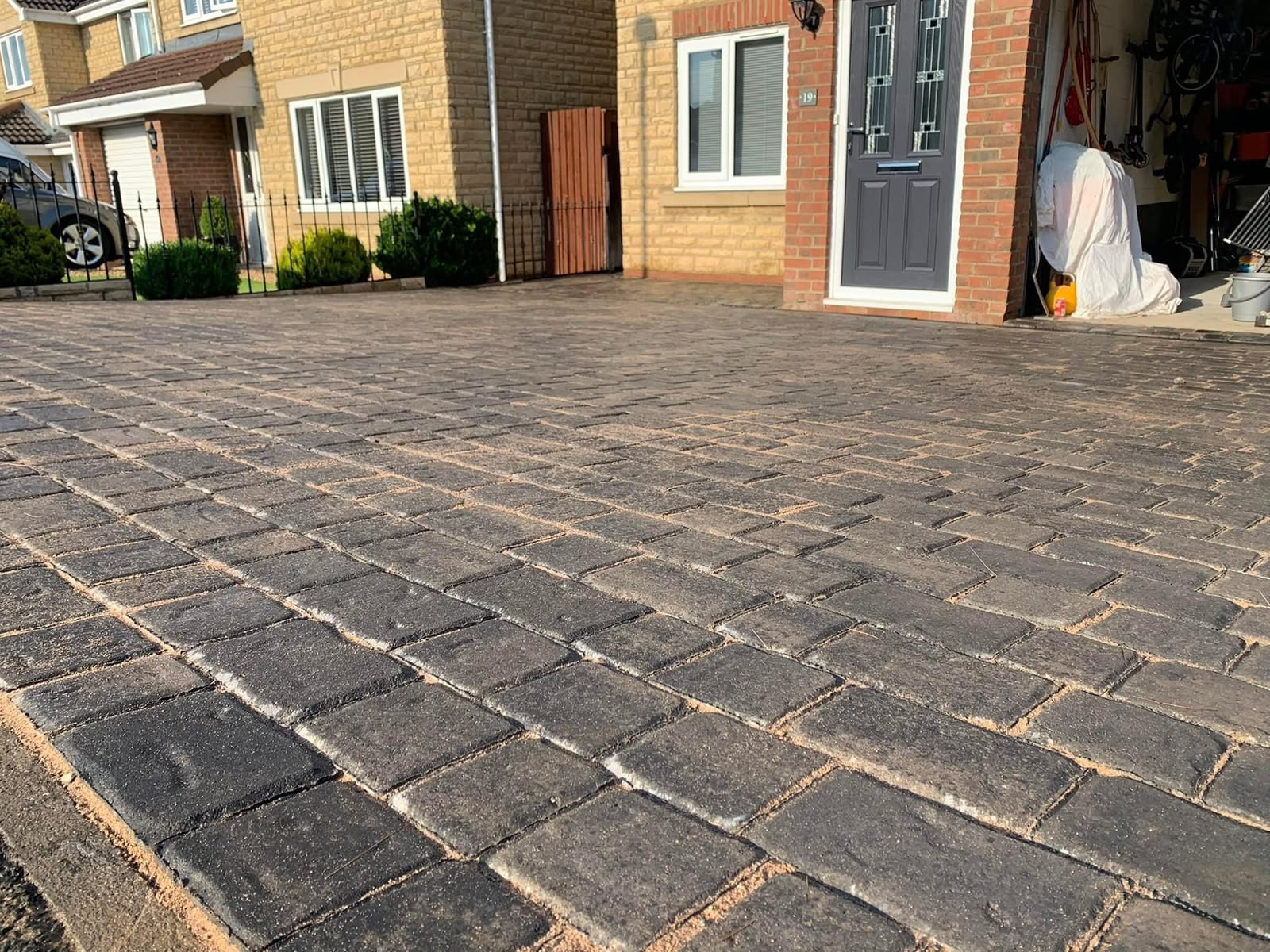
Kiln dried sand is brushed into every joint and vibrated in a second time to lock the surface together, the whole area is cleaned down, and we walk the finished driveway with you before we leave.
What you get
The difference a properly built job makes
Fast turnaround without cutting corners
A typical block paved driveway takes around 4 days on site from excavation to final clean-down, so you are not without vehicle access to your own home for weeks.
Structural strength that suits daily vehicle use
Layered, compacted sub-base construction is built to carry the repeated weight of cars, vans and turning manoeuvres without the rutting that a shallow or rushed base develops.
Individual blocks can be lifted, not just patched
If a drain, cable or pipe under the driveway ever needs attention, the affected blocks can be lifted and relaid afterwards rather than cutting and patching a solid slab.
Lower whole-life cost than repeated patch repairs
A properly built sub-base and edge restraint avoid the repeat call-outs and partial relays that come from a driveway that was laid to a lower spec in the first place.
5 year workmanship guarantee for peace of mind
If the installation moves, sinks or fails within 5 years of completion, we come back and put it right, and every job is covered by £5 million public liability insurance while work is underway.
A finish that matches the property, not a generic pattern
Colour, block size, laying pattern and border detail are chosen to suit the house, not applied as a one-size-fits-all standard package.
Sub-base specification and why depth is not optional
The sub-base carries the load of every vehicle that ever drives onto the driveway, and it is the part of the job that is invisible once the blocks go down. For a domestic driveway we typically excavate to a depth that allows for a compacted stone sub-base of at least 100–150mm, increasing where the existing subgrade is soft, clay-based or poorly draining, which is common across parts of County Durham and Teesside. The stone is laid in layers, usually no more than 100mm at a time, and each layer is compacted with a vibrating plate or roller before the next goes on. Skipping this staged compaction and simply tipping the full depth of stone in one go leaves voids and inconsistent density through the base, which is exactly where settlement and rutting start once vehicles begin using the driveway.
Where ground conditions are particularly poor, waterlogged clay, made-up ground, or areas close to trees with active root systems, a geotextile membrane is laid beneath the sub-base to stop stone working its way down into the subgrade and the subgrade working its way up into the stone. This single addition, done at the point of construction, prevents a great deal of the slow settlement that otherwise shows up as depressions two or three winters later.
Laying patterns and how they affect performance, not just looks
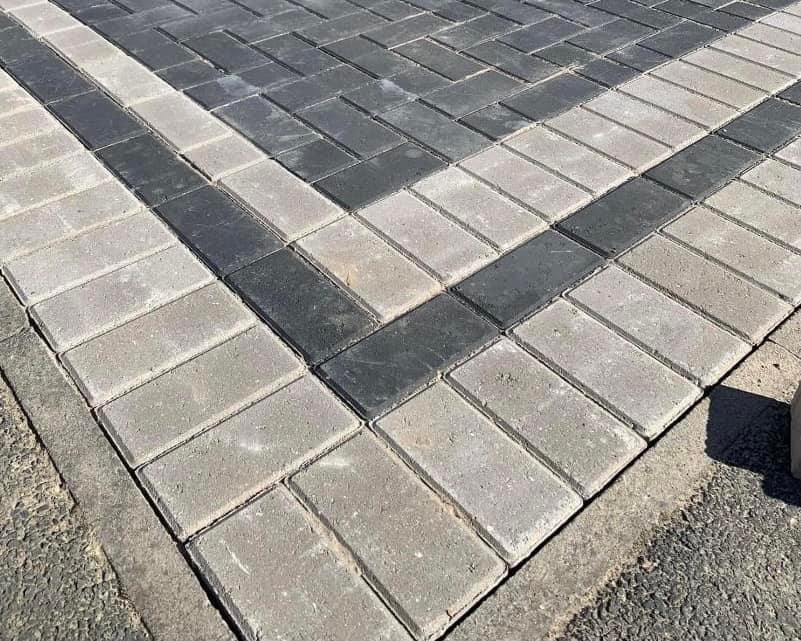
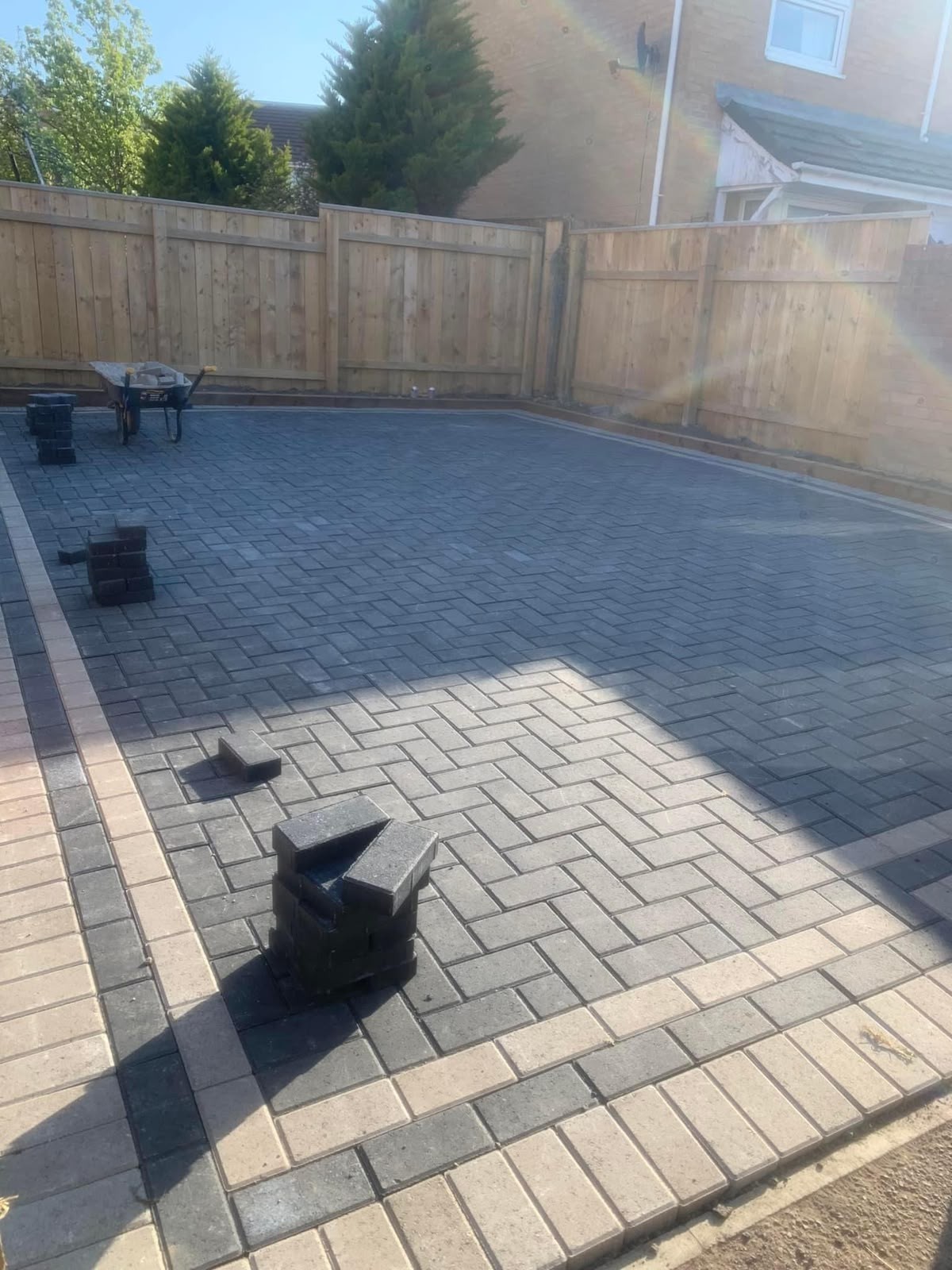
Herringbone, whether at 45 or 90 degrees, is generally the strongest pattern for driveways because the interlocking arrangement resists the lateral thrust generated by turning wheels far better than a stretcher bond or basketweave layout. For a driveway that sees regular vehicle turning, most domestic drives do, particularly at the entrance and any turning area, herringbone is usually the practical recommendation, with a contrasting border or soldier course used to frame the design without compromising the structural pattern in the main body of the drive.
Stretcher bond and basketweave patterns still have their place, particularly on paths, patios or driveways with very light, straight-line vehicle use, and they can look sharper in certain block formats and colours. We will talk through which pattern suits both the aesthetic you want and the way the driveway will actually be used, rather than defaulting to whichever is quickest to lay.
Edge restraints, drainage and permeable paving considerations
Haunched concrete edge restraints are non-negotiable on a driveway that will carry vehicles, without them, the outward pressure from wheel loading gradually spreads blocks apart at every joint, starting at the edges and working inward over time. The restraint is poured against the sub-base and back-filled so it is fully supported, not just bedded loosely on the surface, and it should be continuous around the full perimeter of the paved area including any curves.
Drainage and surface falls are worked out at the design stage using levels taken across the whole area, so water is directed towards a soakaway, gully or permeable jointing detail rather than towards the house or a neighbouring boundary. Where planning rules around permeable surfacing apply, relevant to some driveways depending on size and existing hard standing, permeable jointing compounds or block paving systems can be specified so surface water infiltrates through the paving itself into a permeable sub-base below, rather than running off to a drain.
Residential driveways versus commercial and shared access applications
Domestic driveways are specified for car and light van loading, with sub-base depth and edge restraint sized accordingly. Commercial forecourts, shared accesses and any area that will see delivery vehicles or regular heavier traffic need a deeper, more heavily compacted sub-base and, in some cases, a different block thickness rated for higher loading. We assess actual use rather than assuming every job takes the same specification, because over-specifying wastes money and under-specifying costs far more to fix later.
Straight answers
Block Paving questions
Get a free, written block paving quote
Call 07909 773829 between 7am and 6pm, Monday to Saturday, or send details of your driveway and we will arrange a visit. You will get a clear, itemised written quote with no obligation, and a 20% deposit is all that is needed to secure your installation date.