
Service
Hard Landscaping & Patiosin Darlington, Durham & StocktonBuilt to Last, Not Just to Look Good on the Day
Indian sandstone and porcelain patios, steps, sleeper beds and retaining walls laid on proper bedding and falls, so the space you're paying for still looks right in ten winters, not just this summer.
Family run, 20 years' experience, £5 million public liability insurance and a 5 year workmanship guarantee on every patio, wall and step we build.
- 20 years' experience
- £5m public liability
- 5 year workmanship guarantee
- Free written quotes
- Driveways typically 4 days
Landscaping That's Built on Levels, Not Guesswork
Most enquiries we get about a driveway turn into a conversation about the rest of the garden within the first five minutes, and it's easy to see why. A new drive that stops dead at a cracked path or a patio that's sinking towards the back door just draws attention to the bit that hasn't been touched. Hard landscaping, patios, steps, walling, sleeper beds, is where a garden either starts to work as a space you use, or carries on being somewhere you walk through to get to the car.
What separates a patio that's still flat and tight in ten years from one that's cracking, lipping and pooling water within two isn't the slab you chose. It's what's underneath it. We excavate to a proper depth, build a compacted sub-base where the ground needs it, and bed slabs on a full wet mortar bed rather than dots and dabs of mortar under the corners, which is the single biggest reason patios rock and crack out along Teesside and County Durham gardens that were laid on the cheap.
We work across Darlington, Durham, Stockton, Northallerton, Hartlepool, Sunderland, Bishop Auckland and Richmond, and we've taken on landscaping jobs from York up to Newcastle and across to Penrith. Whether it's a single patio replacing a tired concrete slab, a full rear garden redesign with steps and retaining walls, or landscaping to sit alongside a new driveway, the approach is the same: get the levels and drainage right first, then make it look good.
Based in Fishburn and working right across County Durham, Teesside and North Yorkshire. See recent projects or read how we work.
Who it's for
- Homeowners with a cracked, sunken or algae-covered existing patio
- Anyone extending a new driveway installation into the rest of the garden
- Sloping gardens that need steps, terracing or retaining walls to be usable
- Families wanting a low-maintenance seating or entertaining area
- Properties where standing water collects against the house or a fence line
When it's usually needed
- Existing slabs are loose, rocking underfoot or lipping at the edges
- Water pools on the patio after rain instead of running away
- A sloped garden currently has no safe, level route between areas
- Retained soil or raised beds are held back by rotting timber or a leaning wall
- You're planning a driveway and want the frontage or garden finished to match
The cost of leaving it
What happens when landscaping is put off
Slabs laid on dabs of mortar
Bedding slabs on four blobs of mortar rather than a full wet bed leaves the corners and centre unsupported. Foot traffic and frost work the gaps loose over a couple of winters and the slab starts to rock, crack, or drop at one corner.
No fall built into the patio
A patio laid dead level, or worse, falling towards the house, holds water on the surface and pushes damp against walls and door thresholds. It's one of the more expensive mistakes to fix retrospectively because the whole surface often needs lifting.
Retaining structures with no drainage behind them
A sleeper bed or block wall holding back soil needs drainage behind it, not just in front. Without it, water pressure builds up behind the structure until it bows, leans or fails outright, usually after a wet spell rather than gradually.
Steps and levels that aren't set out properly
Inconsistent step rises are a genuine trip hazard, and gardens with awkward, mismatched levels between patio, lawn and path get used less, not more, regardless of how good the materials are.
Mistakes we're called out to fix
- - Choosing the paving material before the base and drainage have been worked out
- - Laying a patio flush with an internal floor level, leaving no gap for damp-proofing
- - Using softwood sleepers with no treatment or drainage where they're in constant contact with wet soil
- - Pointing joints with a sand-cement mix that shrinks and cracks out within a season
- - Building a retaining wall without footings sized to the height and load it needs to hold
- - Treating patio and driveway work as unrelated projects when they share the same drainage route
Our process
How your landscaping job runs, step by step
- 01
Site visit and design conversation
We come out, look at the levels, drainage and how the space is actually used, and talk through material options, Indian sandstone, porcelain, or a mix with block or brick detailing, before anything is priced.
- 02
Written quote
A clear, itemised quote follows with no cost and no obligation. You can take time over it, compare it, or ask us to adjust the scope before agreeing anything.
- 03
Excavation and base build-up
The area is excavated, waste removed, and a compacted sub-base laid where the ground requires it. Falls are set out at this stage so water has somewhere to go before a single slab is laid.
- 04
Laying, walling and jointing
Slabs are bedded on a full mortar bed, steps and walls built to line and level, and joints finished with the correct compound for the material so they don't crack out in the first frost.
- 05
Sleeper beds and structural elements
Where the design includes raised beds, retaining walls or sleeper terracing, these are built with proper footings or foundations and drainage behind them, not just dropped on top of the existing ground.
- 06
Clean down and handover
The finished area is cleaned down, surplus material and waste taken away, and we walk the job with you so you know how to look after the new paving and jointing.
What you get
The difference a properly built job makes
A garden that ties in with the driveway
Doing the driveway and the landscaping together means one set of levels and one drainage plan, so thresholds line up and water goes where it's meant to instead of finding the lowest point by accident.
Correct falls away from the house
Patios and paths are set out with a fall away from walls and thresholds, reducing the risk of water sitting against the building or working its way under doors.
Full mortar bedding, not dabs
Every slab sits on a solid, continuous bed of mortar, which spreads load evenly and stops the rocking and cracking that comes from unsupported corners.
Materials chosen for how they'll actually perform
We'll tell you honestly where porcelain suits a low-maintenance modern space better than sandstone, and where natural stone is the better fit for a period property, not just sell whatever's easiest to lay.
Steps and levels you can use without thinking about them
Consistent rises, sensible widths and proper handrail fixing points where needed mean the garden gets used year-round rather than avoided on sloping or uneven ground.
5 year workmanship guarantee
If a slab moves, a joint fails or a wall settles within five years because of how it was built, we come back and put it right: that's covered in writing, alongside our £5 million public liability insurance.
Patio Materials: Indian Sandstone vs Porcelain
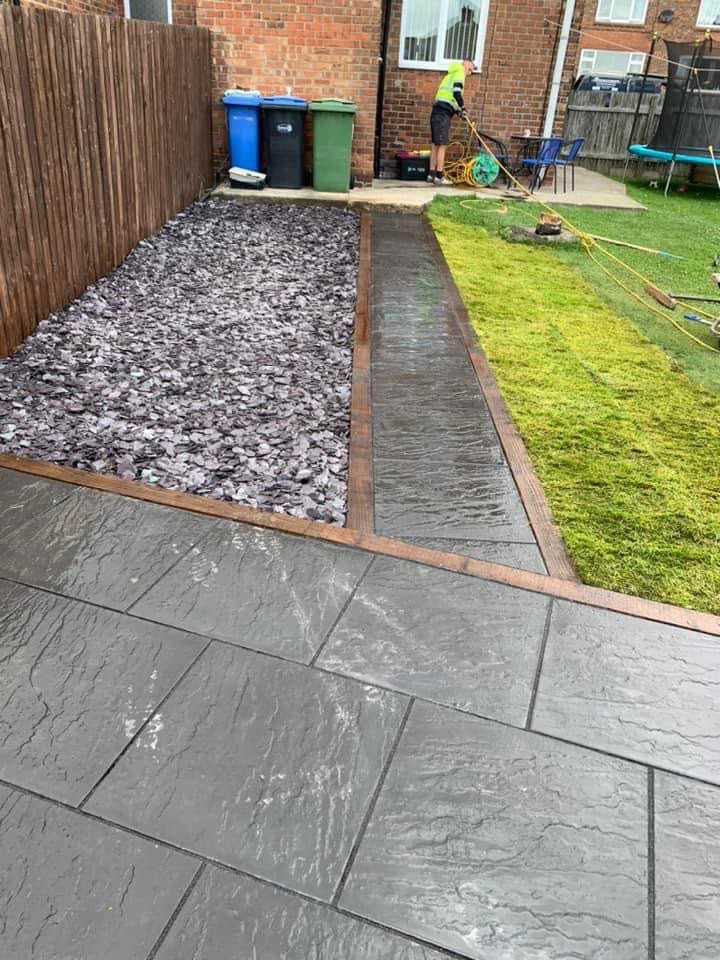
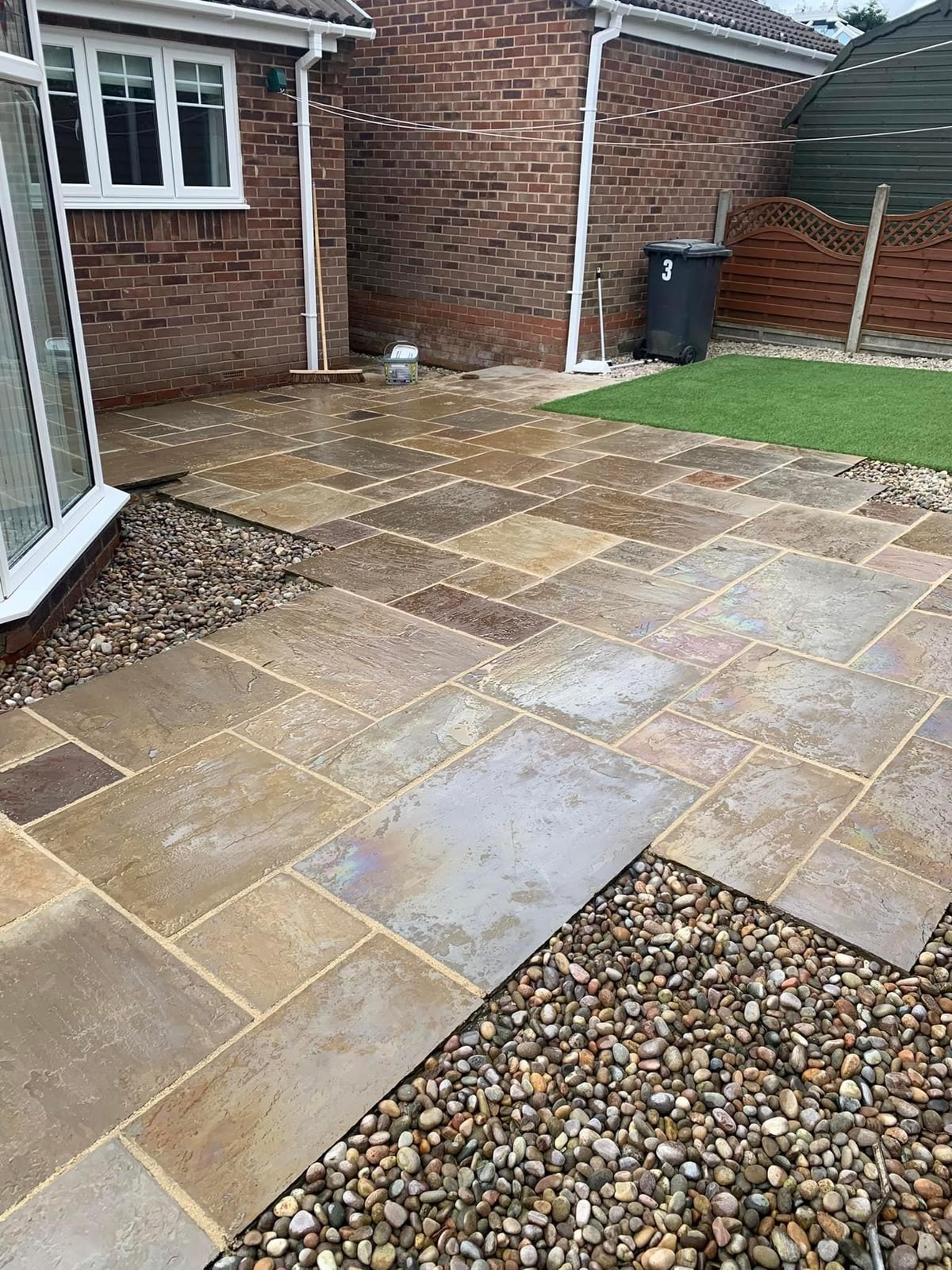
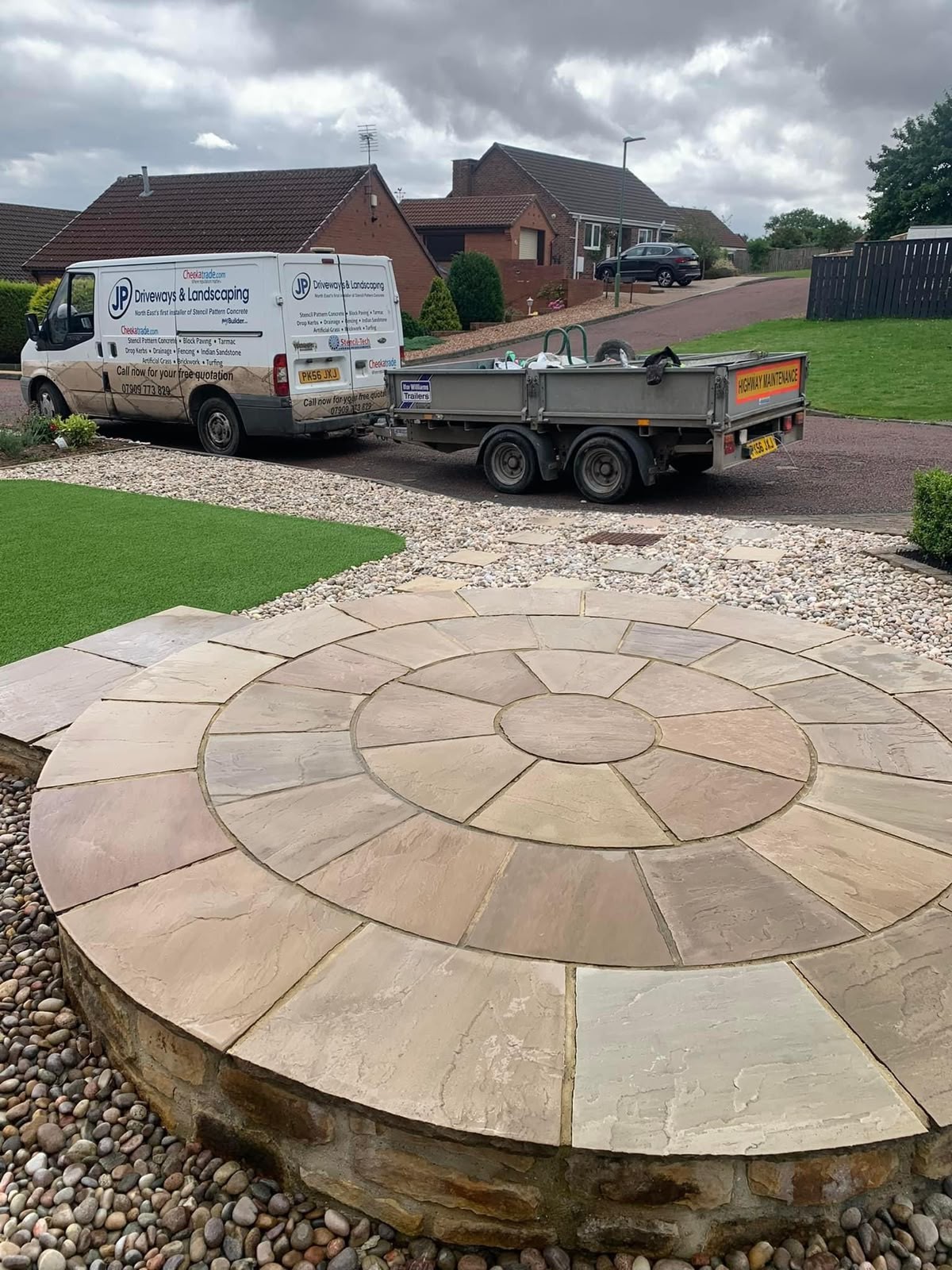
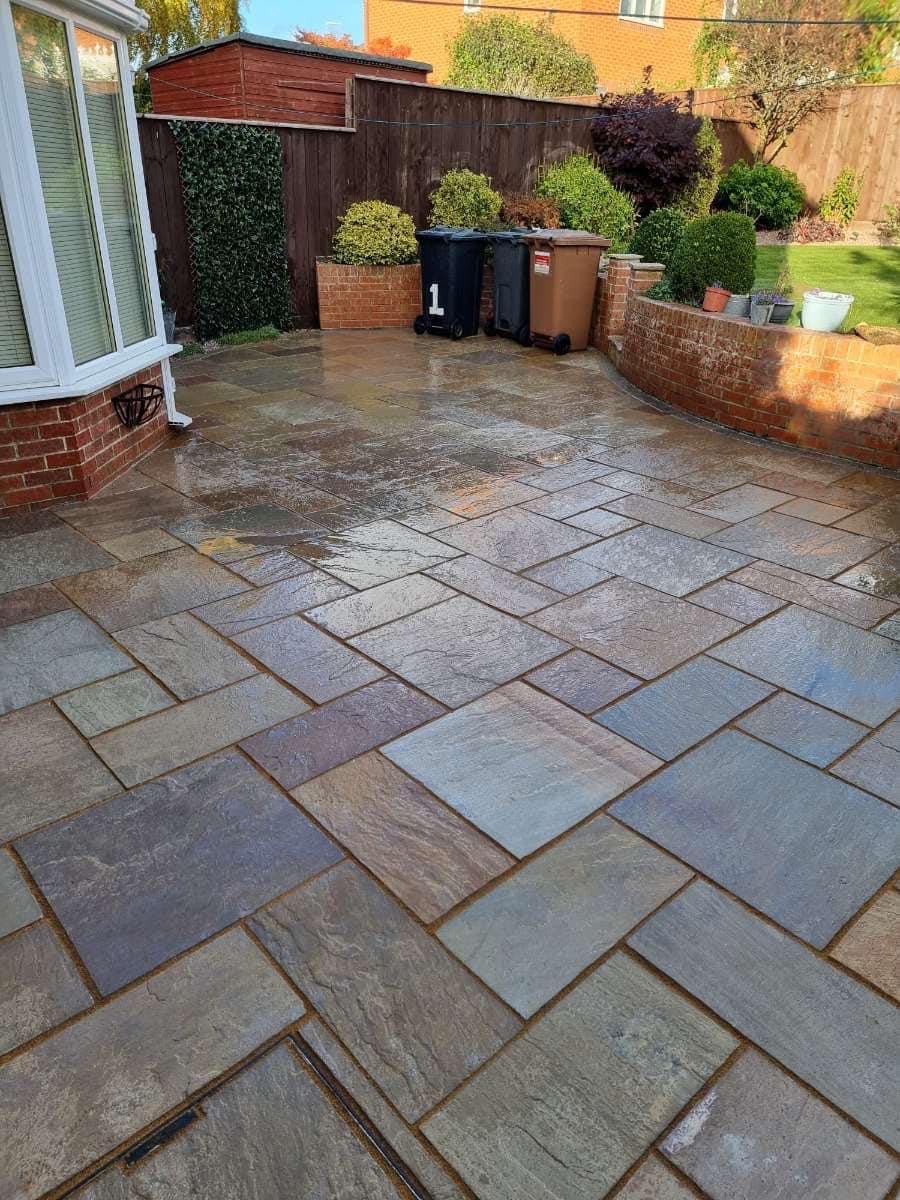
Indian sandstone remains the most requested patio material across County Durham and North Yorkshire gardens, and for good reason: it's a natural riven stone with genuine colour variation, it weathers well, and it suits period properties and traditional gardens without looking imported. It does need occasional sealing to resist staining from leaf tannin, garden furniture rust marks and oil, and being a natural product each slab varies slightly, which some homeowners love and others find inconsistent.
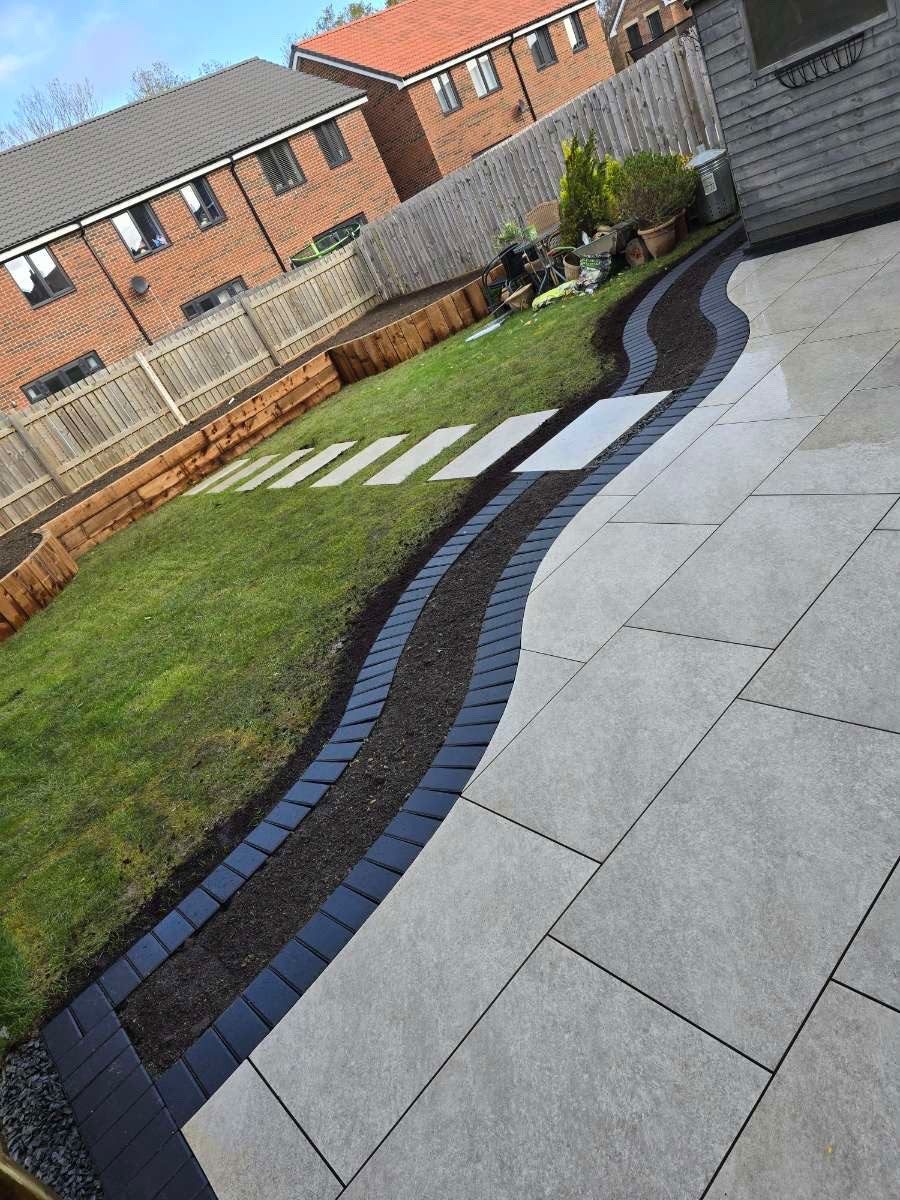
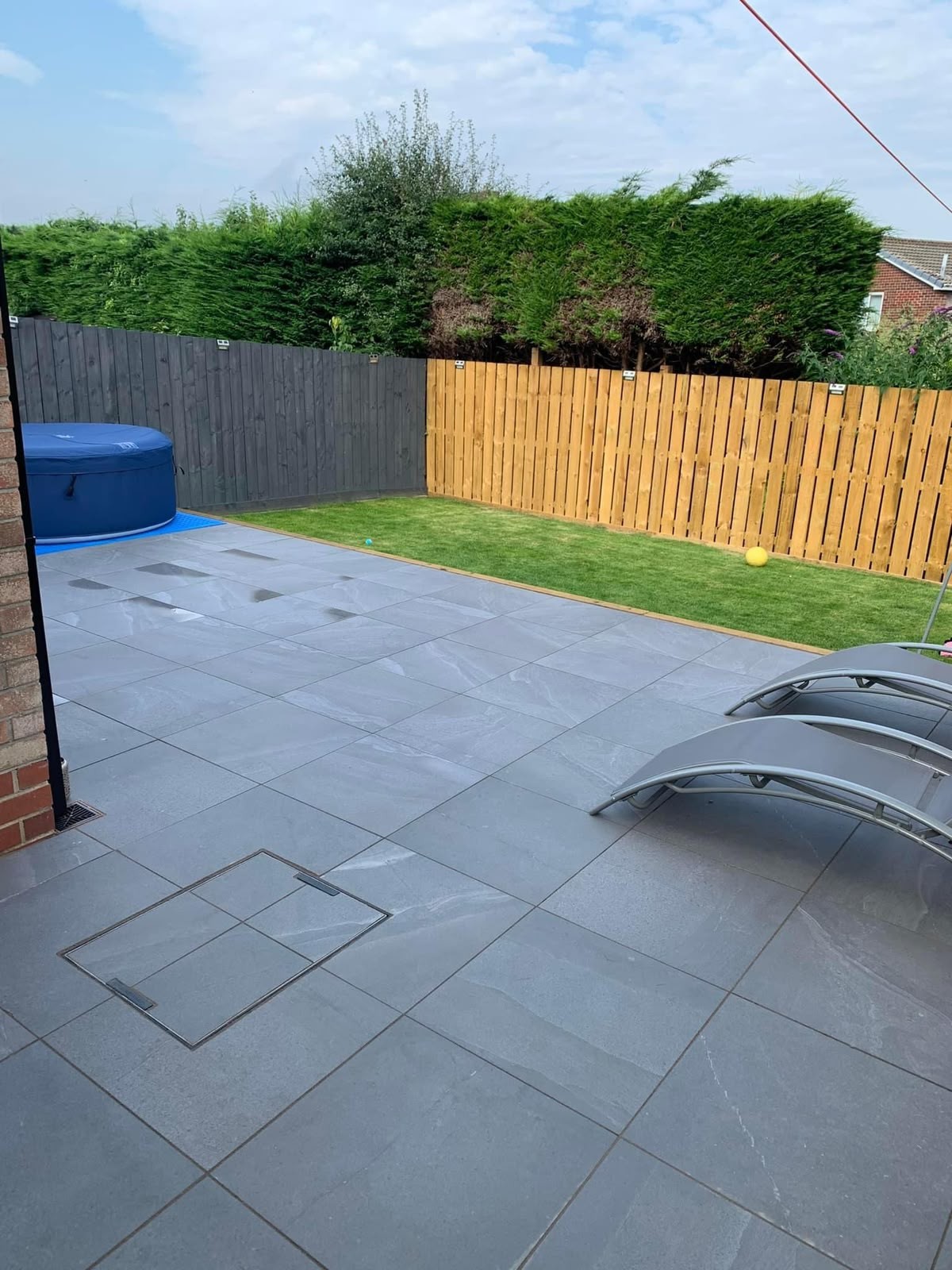
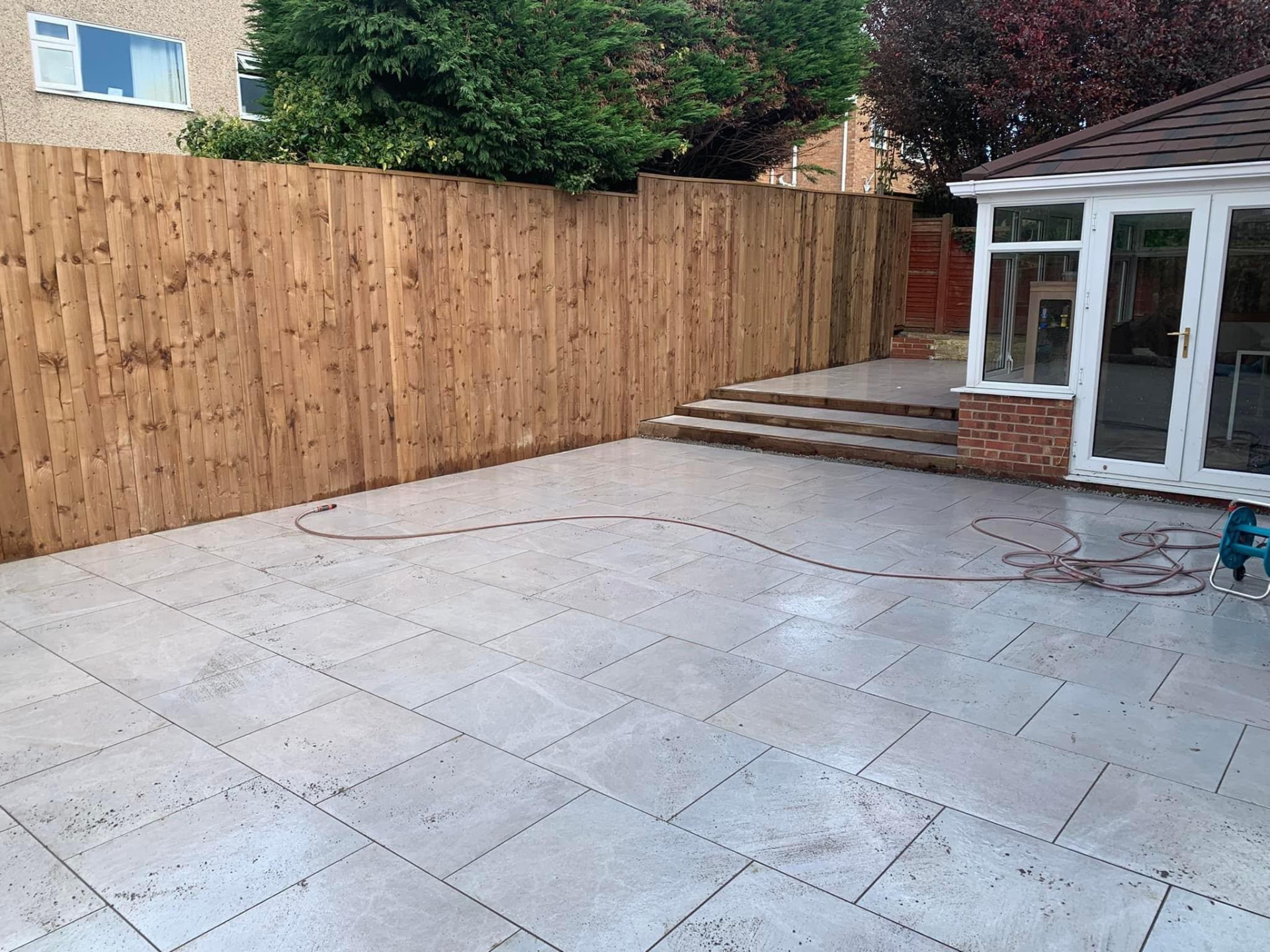
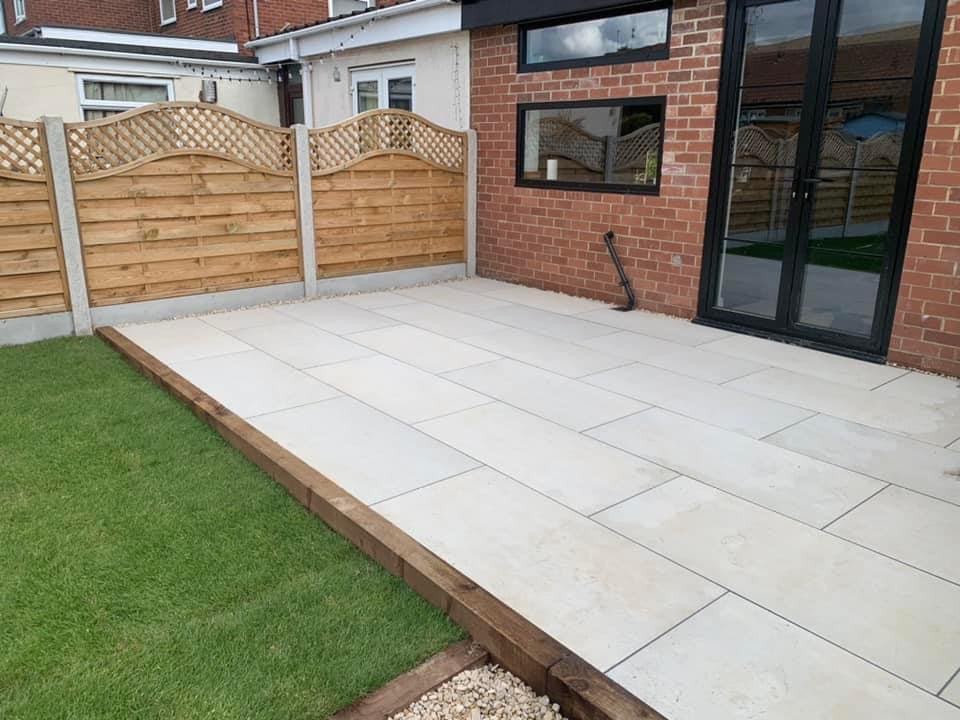
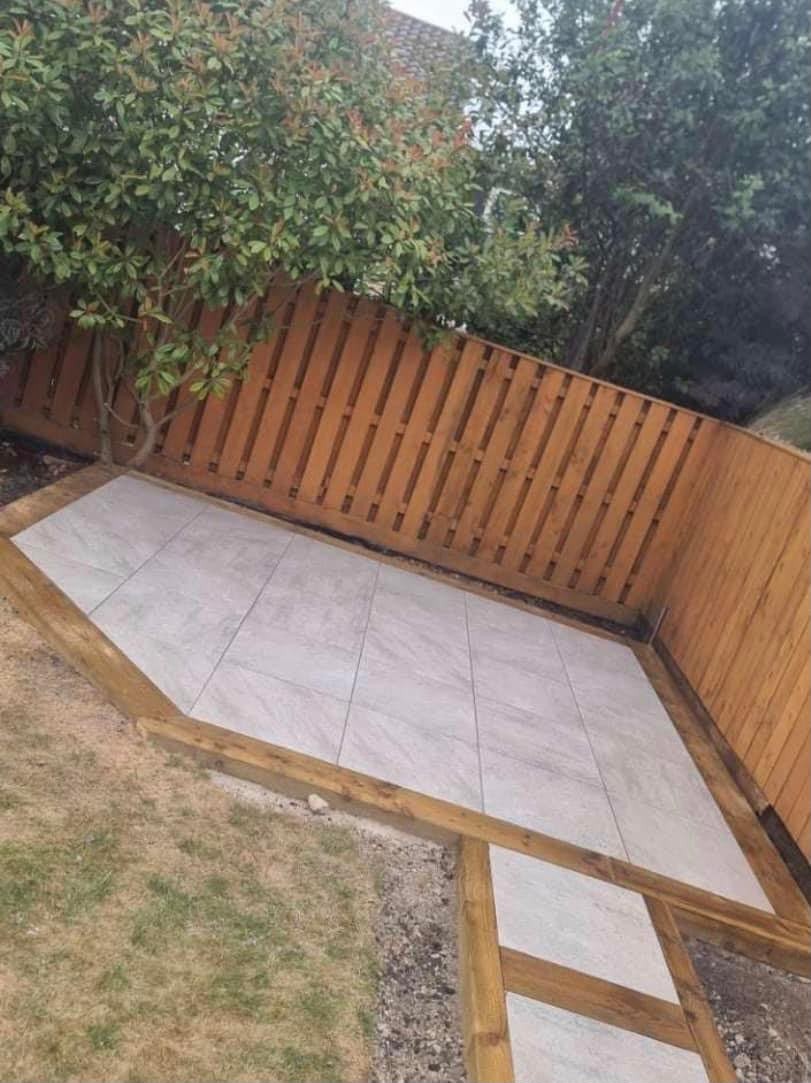
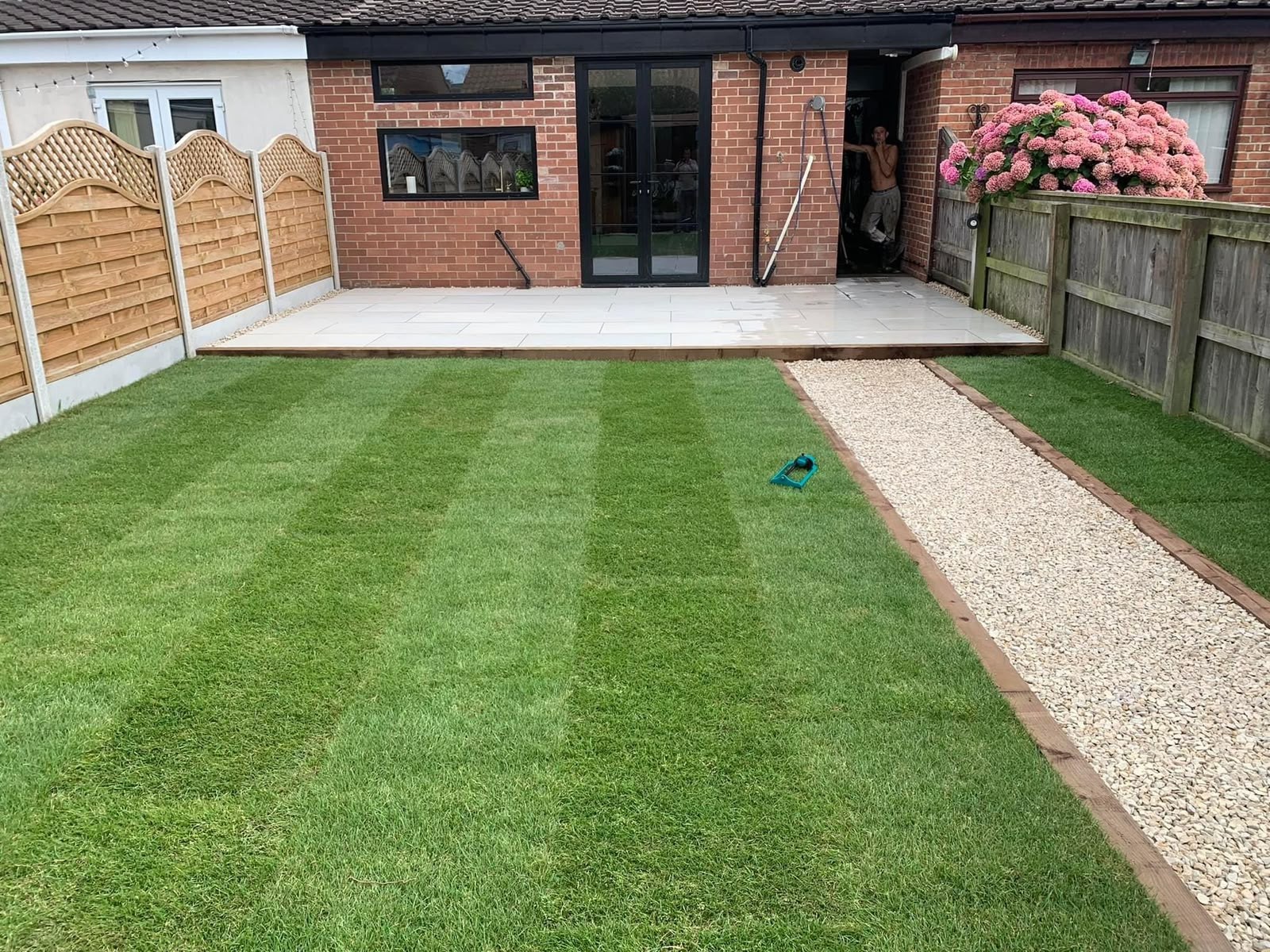
Porcelain is the material we're laying more of each year, particularly for modern extensions, contemporary rear gardens and anywhere low maintenance genuinely matters. It's manufactured to a consistent colour and thickness, resists staining without sealing, doesn't hold algae the way some natural stone can in shaded, damp corners, and the surface texture can be chosen to balance grip against a smooth, clean look. It costs more per square metre than sandstone as a rule, but the reduced maintenance over years can offset that for a lot of households. We'll talk through both honestly against your specific garden, aspect and budget rather than push whichever is easier to install.
Steps, Terracing and Sloping Gardens
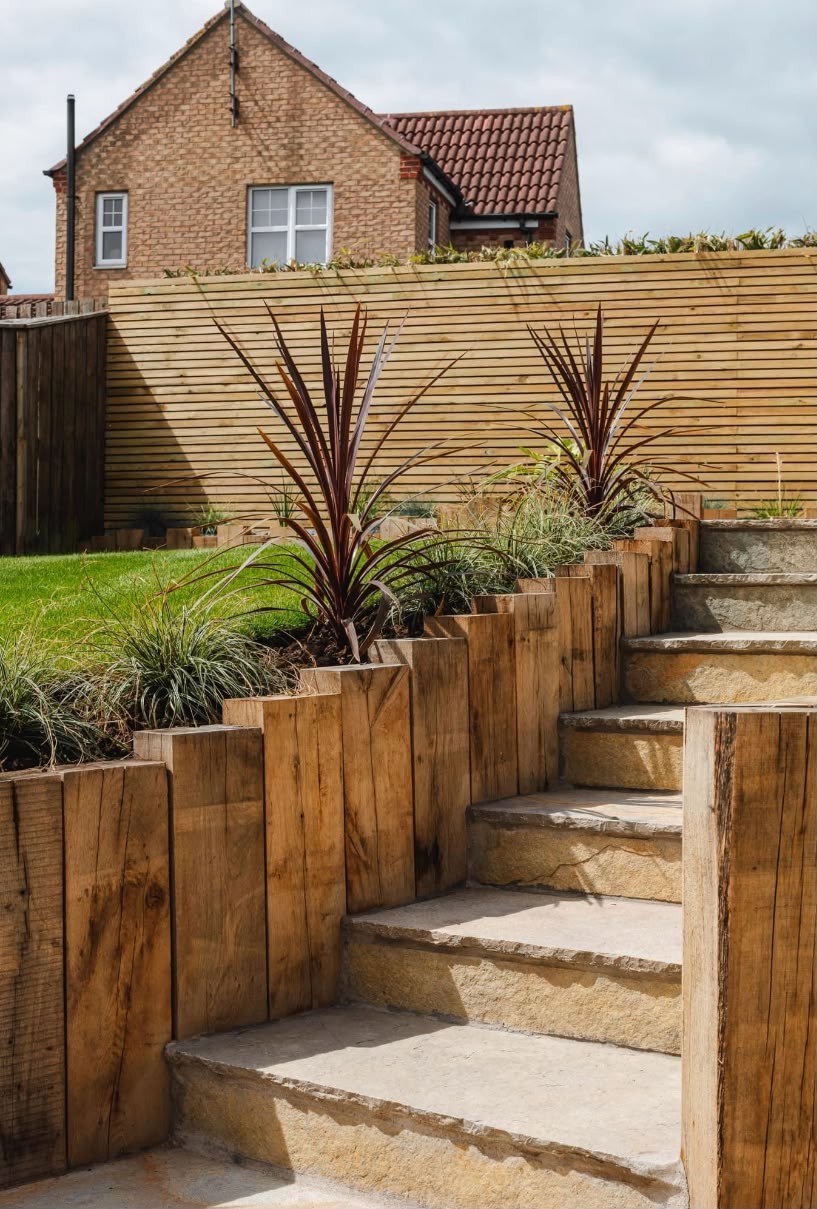
A lot of gardens in and around Darlington and Durham sit on a slope, and a sloping garden that's never been terraced usually gets used far less than a level one: mowing is awkward, furniture doesn't sit flat, and children and older family members alike avoid the steeper parts. Steps and terracing solve this properly by breaking the garden into level, usable zones connected by safe, consistent steps rather than leaving it as one continuous incline.
Getting steps right is about the rise and going staying consistent from top to bottom: inconsistent step heights are one of the most common trip hazards in domestic gardens, and it's a mistake that's completely avoidable with proper setting out before construction starts. We also think about how steps tie into lighting, planting borders and any retaining structure needed to hold the terrace behind them, so the whole thing reads as one considered design rather than a patio with some steps bolted onto the end of it.
Sleeper Beds, Retaining Walls and Drainage
Railway sleepers and timber-effect retaining beds have become one of the most popular ways to create raised borders, define a lawn edge or hold back a change in level, largely because they look good quickly and cost less than a full masonry wall. The part that gets skipped on a lot of DIY and budget installations is drainage: soil retained behind timber or block holds water like a sponge in wet weather, and without a way for that water to escape, the pressure behind the structure builds until it leans, bows or the fixings fail.
We build sleeper beds and retaining walls with drainage worked into the design from the start: whether that's a perforated pipe and stone backfill behind a taller wall, or simply enough gaps and free-draining material behind a lower sleeper bed to stop water building up. For anything holding back a significant height of soil, we also make sure the footing or foundation is sized properly for the load, because a retaining structure is doing real structural work even when it looks like a garden feature.
Jointing, Sealing and Long-Term Maintenance
The jointing compound between slabs does more work than most people realise: it's what stops water tracking down into the bedding layer, what resists weed growth, and what determines whether the patio still looks crisp in five years or starts looking tired within one wet winter. We use jointing products suited to the specific material and joint width rather than a generic sand-cement mix that shrinks, cracks and lets water through.
Sealing is worth considering for both sandstone and porcelain, though for different reasons: sandstone sealant reduces staining and can enhance the natural colour, while a porcelain sealant is more about protecting grout lines and adding a layer of stain resistance to an already low-maintenance surface. Neither is essential to the structural life of the patio, but both extend how long it looks genuinely new, and we'll advise honestly on whether it suits your paving rather than upsell it as standard on every job.
Straight answers
Landscaping questions
Get a Free, Written Landscaping Quote
Tell us what you're picturing, a single patio, steps to a sloping garden, a full rear garden redesign, and we'll visit, measure up, and send a clear written price with no obligation. Call 07909 773829, 7am to 6pm Monday to Saturday.