
Service
Gravel DrivewaysCounty Durham, Darlington & StocktonStone That Stays Put
Traditional gravel driveways built over stabilising grids, membrane and a proper compacted sub-base, so the stone stays where you put it instead of migrating into the lawn.
Free written quote, no obligation. 20% deposit secures your date. £5 million public liability insurance and a 5 year workmanship guarantee on every job.
- 20 years' experience
- £5m public liability
- 5 year workmanship guarantee
- Free written quotes
- Driveways typically 4 days
Gravel driveways that walk and drive properly, not just gravel tipped on a garden
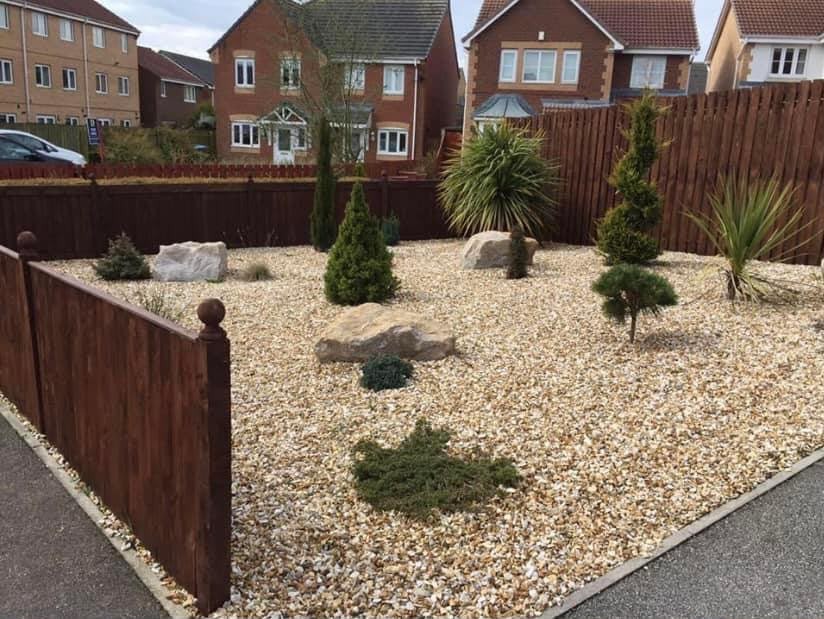
Gravel is one of the most versatile driveway surfaces available, suiting period cottages around Richmond just as well as farmhouses out towards Bishop Auckland or modern estate frontages in Stockton. It drains freely, comes in a wide range of colours and stone sizes, and is one of the more cost-effective ways to cover a large area compared with block paving or resin bound surfacing.
The reputation gravel has for causing problems, stone spreading into the lawn, ruts forming where the car turns, weeds pushing through, comes almost entirely from gravel being tipped straight onto bare or poorly prepared ground with no structure underneath it. Loose stone on soil will always migrate, rut and grow weeds, because there is nothing holding it in place or stopping moisture and organic matter working up through it.
We build gravel driveways with a proper compacted sub-base, a weed suppressant membrane and gravel stabilising grids that hold the stone in individual cells rather than leaving it free to travel. The finished surface still looks, sounds and feels like traditional gravel, but it behaves like a structured driveway rather than a garden feature, and it needs raking far less often as a result.
Based in Fishburn and working right across County Durham, Teesside and North Yorkshire. See recent projects or read how we work.
Who it's for
- Owners of period, rural or listed properties in County Durham where gravel suits the character of the building
- Anyone wanting a large driveway area covered cost-effectively compared with block paving or resin
- Households frustrated with an existing loose-laid gravel drive that rutts, spreads and grows weeds
- Properties needing a free-draining surface where permeability is a planning or drainage consideration
- Homeowners who want the traditional crunch and look of gravel without constant raking and maintenance
When it's usually needed
- An existing gravel drive has thinned out, rutted or spread badly onto the lawn or path
- A new driveway is being laid on a rural or period property and gravel suits the setting better than paving
- Weeds have taken hold through a gravel surface that was never laid over a membrane
- Standing water or drainage issues mean a free-draining surface is preferred over an impermeable one
- A large area needs covering on a budget that would not stretch to full block paving or resin bound
The cost of leaving it
What happens when gravel is put off
Stone migrating into the lawn, path and house
Loose gravel with no stabilising structure or edge restraint will always travel under tyre movement and foot traffic, ending up scattered across the lawn, tracked into the house on shoes, or lost into flower beds along the border.
Rutting where vehicles turn and brake
Without a compacted sub-base and stabilising grids beneath it, gravel forms ruts and bare patches exactly where cars turn or brake most often, leaving an uneven, unattractive surface that gets worse every time it rains.
Weed growth through unprotected gravel
Gravel laid directly onto soil or old hardcore, without a weed suppressant membrane, allows weeds to establish quickly from below as well as from windblown seed on top, meaning constant treatment or hand weeding to keep it presentable.
Poor drainage causing pooling or erosion
If falls and drainage are not planned before the sub-base goes down, water can pool on the surface after rain or wash stone downhill on a sloping drive, undermining the stabilising layer beneath it over time.
Mistakes we're called out to fix
- - Having gravel tipped straight onto bare soil or grass with no membrane or sub-base underneath
- - Skipping stabilising grids to save cost, then dealing with rutting and spreading for years afterwards
- - Choosing a decorative aggregate on looks alone without considering how angular or rounded stone behaves underfoot
- - Leaving out edge restraints, which allows the whole surface to gradually spread beyond its intended boundary
- - Not planning falls before laying, leading to water pooling or washing stone down a sloping drive
- - Assuming all gravel needs is an occasional top-up rather than addressing the structure underneath it
Our process
How your gravel job runs, step by step
- 01
Site visit, measure-up and free written quote
We assess ground conditions, existing drainage, slope and access, discuss aggregate colour and size options, and provide a clear written quote with no cost and no obligation.
- 02
Excavation and waste removal
The existing surface or turf is dug out to the correct depth and taken away, creating a clean, level base to build the new structure on.
- 03
Weed membrane installation
A weed suppressant membrane is laid across the excavated area to stop growth from below, forming a barrier between the ground and the stabilising layer above it.
- 04
Compacted sub-base
A stone sub-base is laid and compacted in layers to provide a firm, stable foundation that will not settle or rut under vehicle weight.
- 05
Stabilising grids and edge restraints
Gravel stabilising grids are laid across the sub-base and edge restraints installed around the perimeter, giving the stone individual cells to sit in rather than free rein to travel.
- 06
Aggregate fill and finishing
The chosen decorative gravel is spread and worked into the grids, levelled off, and the site cleared, leaving a stable, free-draining surface ready to use.
What you get
The difference a properly built job makes
Stone stays where it is put
Stabilising grids hold the gravel in individual cells so it resists migrating into the lawn or path the way loose-laid gravel does, cutting raking down to an occasional job.
Free-draining and low-cost per square metre
Gravel is one of the more economical ways to surface a large driveway area, and it drains water through rather than off, which suits properties with limited soakaway capacity.
Suits period and rural properties
The traditional look and sound of gravel complements older stone properties and rural settings across County Durham and North Yorkshire in a way paving sometimes does not.
Weed control built in from the start
A weed suppressant membrane under the sub-base stops growth from below, meaning far less ongoing treatment than an unprotected gravel surface.
Wide choice of decorative aggregates
Colours, stone sizes and finishes can be chosen to suit the property, from traditional golden gravel to darker slate chippings or self-binding gravel blends.
Can be combined with paving
Paved parking bays, a paved threshold at the door or a setted border can be combined with a gravel drive to keep loose stone away from the house entrance.
Why the sub-base and membrane matter more than the gravel itself
The single biggest factor in whether a gravel driveway performs well long term is what happens before any decorative stone is put down. We excavate to a depth appropriate for the ground conditions and expected vehicle loading, then lay a weed suppressant membrane across the full area. This membrane does two jobs: it stops weeds establishing from below, and it separates the sub-base stone from the underlying soil so the two layers do not mix and lose their compaction over time.
On top of the membrane, a compacted stone sub-base is laid in layers and rolled to give the driveway structural strength. This is exactly the same principle used under block paving or tarmac, and it is the layer that stops a gravel drive rutting where cars turn or brake. Skipping this stage, or laying a thin sub-base to save cost, is why so many gravel driveways across the region end up needing constant attention within a couple of years.
How stabilising grids change the way gravel behaves
Gravel stabilising grids are honeycomb-cell panels laid across the compacted sub-base and filled with the chosen decorative aggregate. Each cell holds a small amount of stone in place, meaning the surface as a whole resists lateral movement under tyres and feet far better than loose stone with nothing containing it. The grids sit below the visible surface, so the finished drive still looks and sounds like traditional gravel, but it drives and walks far more like a solid, structured surface.
This is particularly valuable on driveways with a turning circle, a sloping approach, or heavy use by multiple vehicles, all situations where unstabilised gravel typically fails fastest. Edge restraints around the perimeter complete the picture, containing the stone within its intended footprint rather than letting it gradually spread into borders, lawns or neighbouring paths.
Choosing an aggregate for the setting and the use
Decorative aggregates vary in colour, stone size and shape, and the choice affects both appearance and practicality. Angular, self-binding gravels compact together well and are comfortable underfoot, while rounder, more decorative gravels give a traditional crunching sound but can be slightly less stable without grids beneath them. Colour choices range from warm golden and buff tones that suit sandstone properties, through to grey and slate chippings that work well against brick and render.
We talk through which aggregate suits a particular property and its use, whether that is a quiet cottage drive in Richmond seeing occasional light traffic, or a busier family driveway in Darlington or Stockton with daily vehicle movements, deliveries and visitors turning in and out.
Combining gravel with paving and drainage planning
Gravel does not have to cover the whole driveway. Paved parking bays set within a gravel area keep tyres on a firm, dust-free surface, a paved threshold at the door stops loose stone being tracked indoors, and a block or setted border frames the gravel and reinforces the edge restraint. These combinations are common across the properties we work on in County Durham and North Yorkshire and often give the best balance of cost, practicality and appearance.
Drainage and falls are planned before any sub-base goes down, so water moves through the permeable gravel surface and away from the house rather than pooling on top of it or eroding the aggregate on a sloping drive. Getting this right at the design stage avoids problems that are much harder to correct once the drive is finished.
Straight answers
Gravel questions
Get a free, written quote for your gravel driveway
We cover Darlington, Durham, Stockton, Northallerton, Newcastle, Hartlepool, Sunderland, Bishop Auckland and Richmond, with jobs completed from York up to Newcastle and across to Penrith. Call 07909 773829, 7am to 6pm Monday to Saturday, and we will arrange a visit, measure up properly and send a clear written quote with no obligation.