
Service
Resin Bound Drivewaysin Darlington & County DurhamSmooth, Permeable, Genuinely Low Maintenance
A seamless resin bound surface trowelled on site over a properly built permeable base, no loose stone, no joints for weeds, and a finish that stays neat with an occasional sweep, backed by a 5 year workmanship guarantee.
Free written quote, no obligation. 20 years' experience, £5 million public liability insurance, 5 year workmanship guarantee on every installation.
- 20 years' experience
- £5m public liability
- 5 year workmanship guarantee
- Free written quotes
- Driveways typically 4 days
Resin bound surfacing done properly, base first
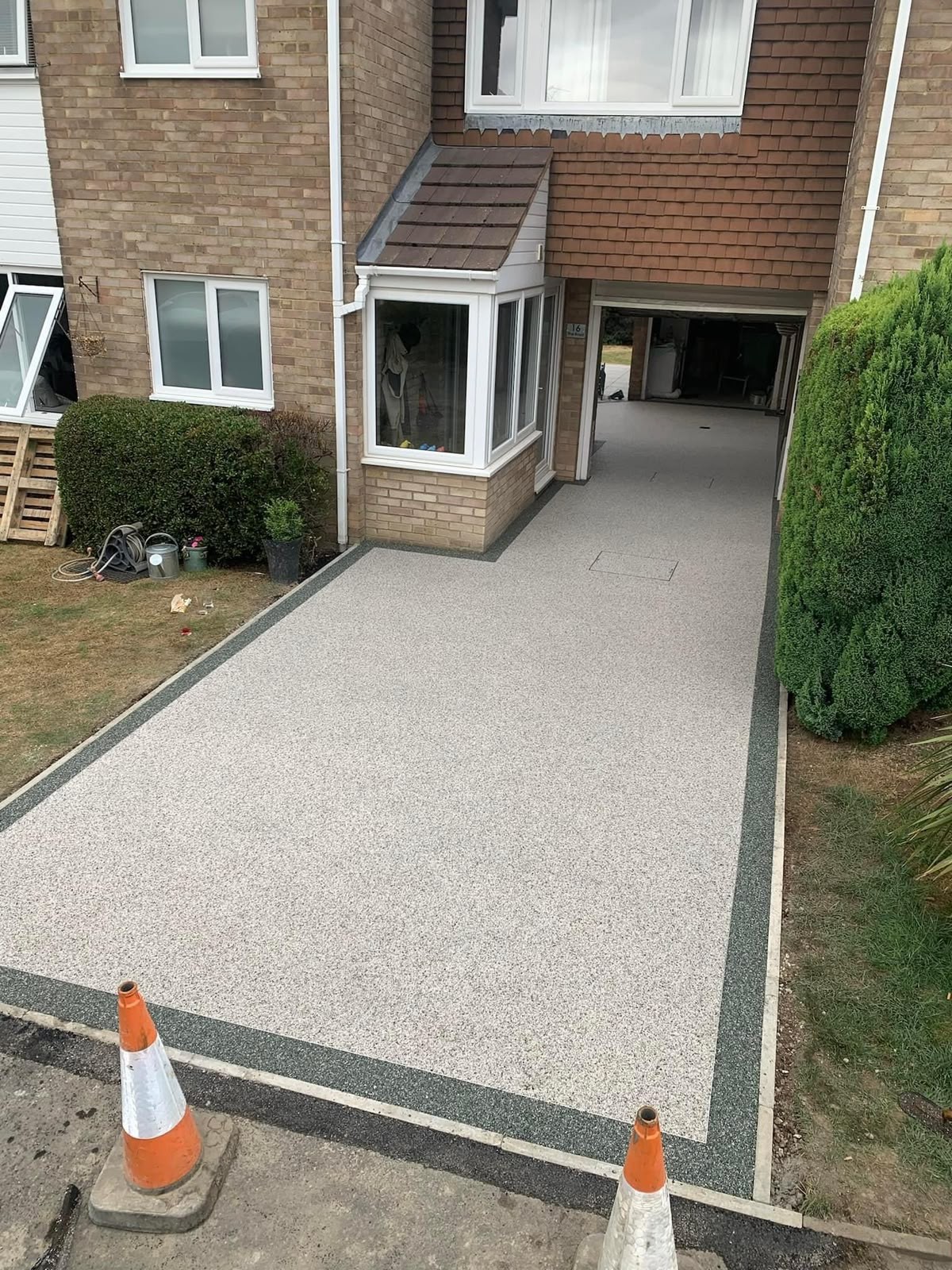
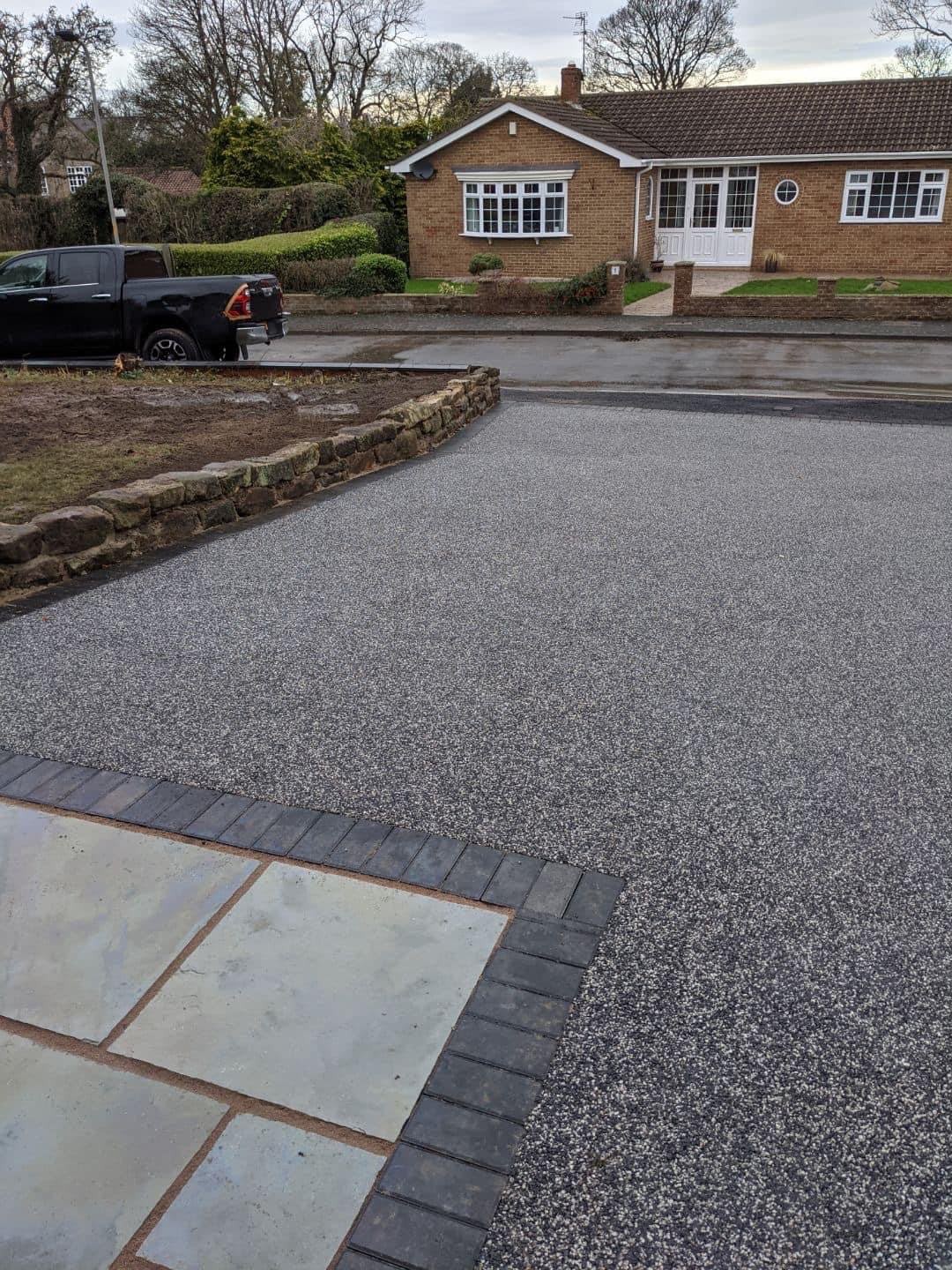
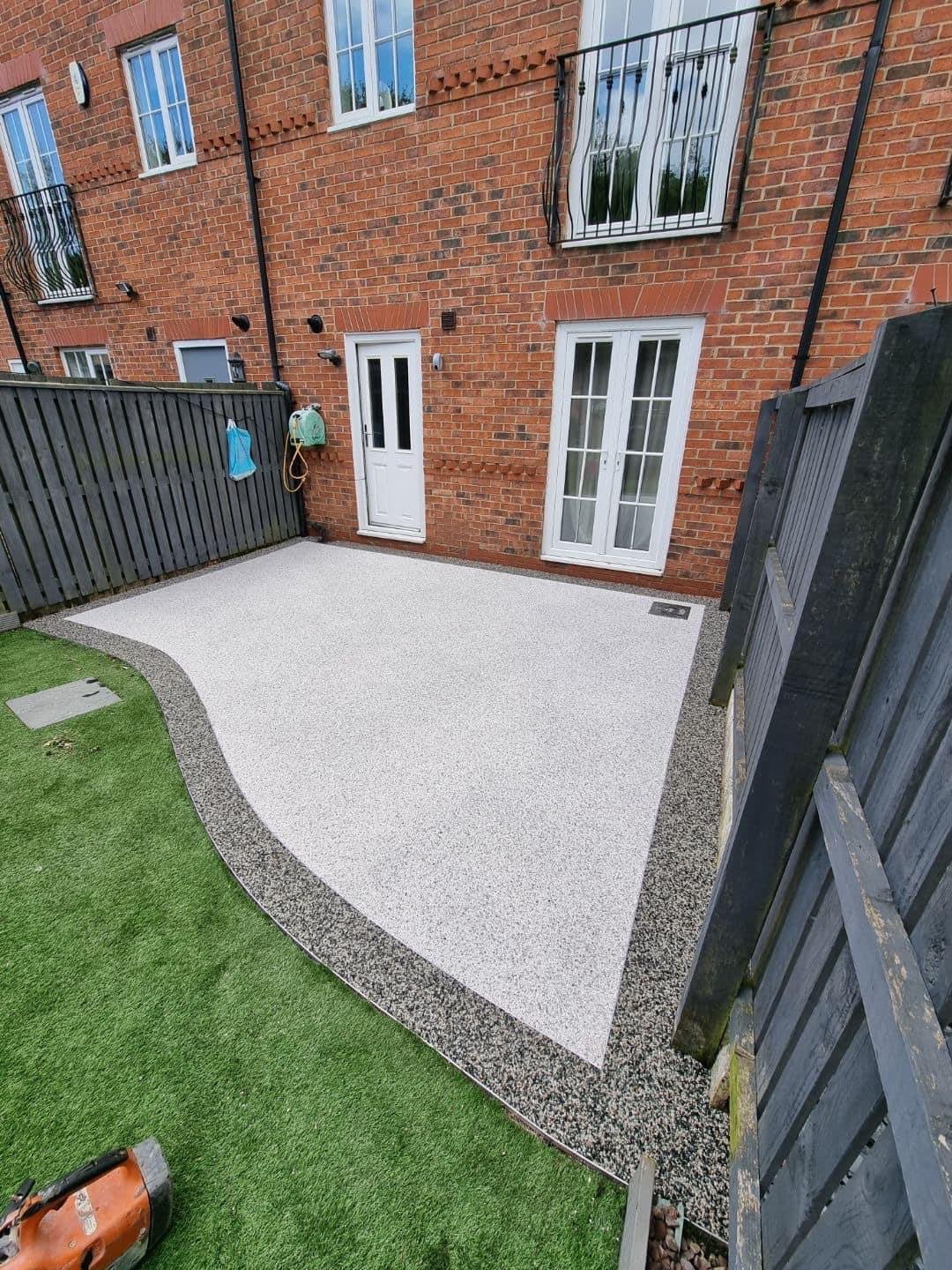
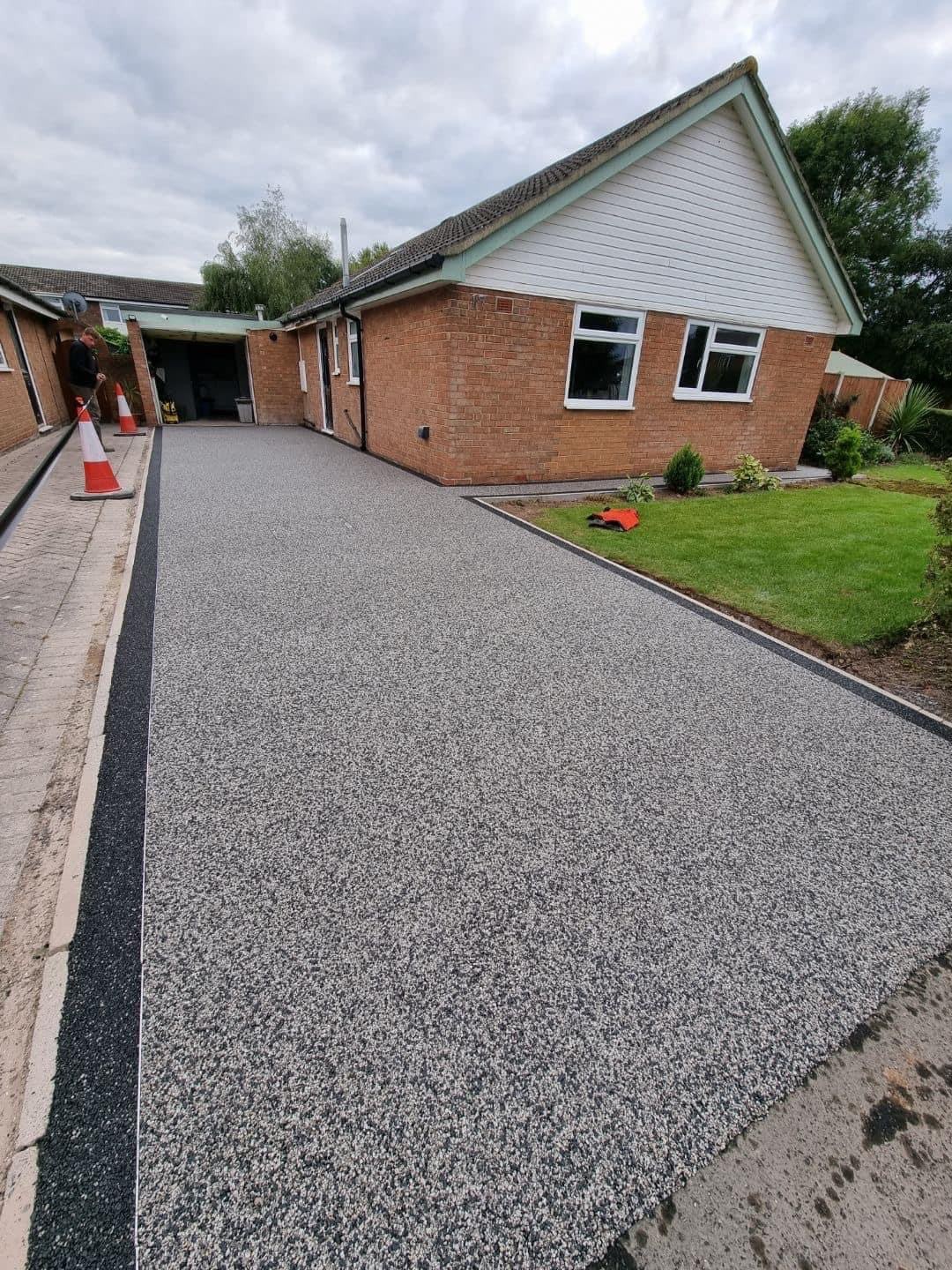
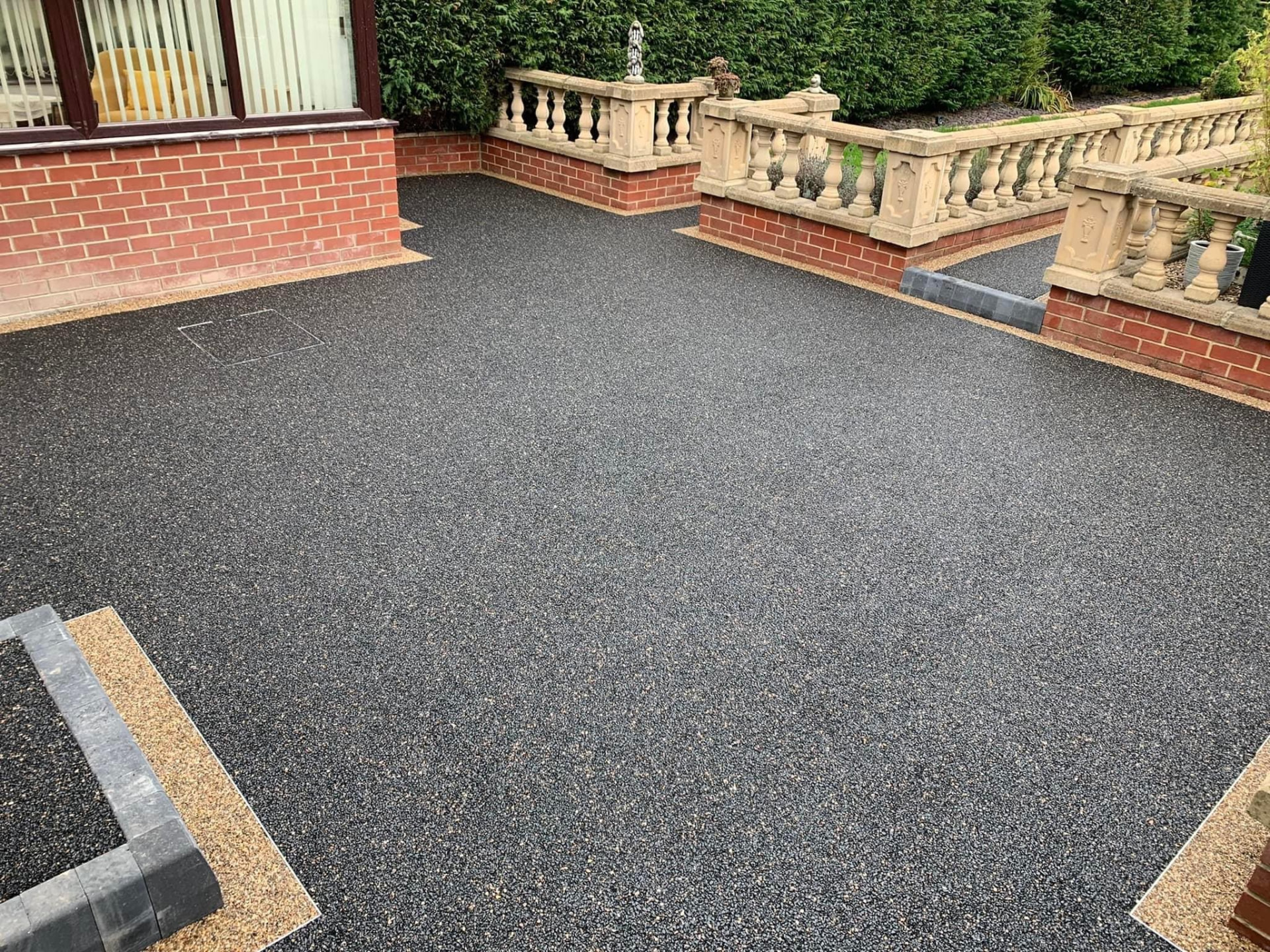
Resin bound is natural aggregate mixed with clear resin in a forced-action mixer and then trowelled out on site, which produces a single continuous surface with no joints, no loose stone underfoot, and no gaps where weeds or moss can establish. It reads as a smart, uniform finish whatever the aggregate blend, and it is comfortable for pushchairs, wheelchairs and bare feet in a way that gravel or block paving simply is not.
Because the aggregate is fully coated in resin rather than bonded loosely, rainwater passes straight through the surface itself into the layer below, rather than sheeting off across the top. That permeability is genuinely useful where surface water drainage or planning permeability rules are a consideration for a driveway. It only works, though, if what sits underneath drains properly too, which is why base preparation matters more with resin bound than with almost any other surface we lay.
We install resin bound driveways, paths and patio surrounds across Darlington, Durham, Stockton, Northallerton, Newcastle, Hartlepool, Sunderland, Bishop Auckland and Richmond, with work also taking us from York up to Newcastle and across to Penrith. Every quote is a free, written price based on a site visit, not a guess based on photos alone.
Based in Fishburn and working right across County Durham, Teesside and North Yorkshire. See recent projects or read how we work.
Who it's for
- Homeowners who want a smooth, low-maintenance surface without loose stone or joint sand
- Households with pushchairs, wheelchairs or elderly residents who need an even, non-slip surface
- Properties where planning permeability rules apply to new hard standing
- Anyone with a sound existing tarmac or concrete driveway wanting a fresh, modern finish over it
- Front gardens and driveways where a seamless, contemporary look matters as much as function
When it's usually needed
- Your existing driveway is loose gravel that constantly needs raking and topping up
- Cracked or ageing tarmac or concrete needs a genuine refresh rather than full replacement
- You need a permeable surface to satisfy drainage or planning requirements on a new area of hard standing
- Block paving joints have failed and weeds or moss are a constant, losing battle
- You want a surface that is safer and smoother underfoot for young children or mobility needs
The cost of leaving it
What happens when resin bound is put off
Resin laid over a failing base fails with it
Resin bound is only as good as what is underneath it. Laying a fresh resin surface directly over cracked, sinking or waterlogged tarmac or concrete without proper assessment and preparation means the new surface inherits every fault of the old one, often within a single season.
Poor drainage below the surface causes standing water and staining
If the sub-base is not genuinely permeable, compacted too tightly, or built from the wrong material, water that passes through the resin has nowhere to go. It sits, softens the base over time, and eventually shows up as low spots, discolouration or a surface that feels spongy underfoot.
Incorrect resin-to-aggregate ratio shortens the surface's life
Resin bound systems rely on a specific mix ratio to bind the aggregate properly. Under-resined mixes look fine on day one but begin to shed loose stone and develop surface fretting within a year or two, particularly under vehicle turning.
Ignoring UV-stable resin leads to premature discolouration
Standard resins can yellow or discolour under prolonged UV exposure. A driveway laid without a UV-stable resin can noticeably change colour within a couple of summers, especially on south-facing plots.
Mistakes we're called out to fix
- - Accepting a quote to resin-coat an existing driveway without anyone actually assessing whether that base is sound enough to take it
- - Choosing the cheapest aggregate blend without checking it is rated for vehicle traffic rather than pedestrian use only
- - Assuming resin bound needs no base preparation at all because it is described as an overlay system
- - Not asking whether the resin used is UV stable, which affects how the colour holds up over years rather than weeks
- - Overlooking edge detailing, without a proper trim or restraint, resin bound edges can crumble where they meet a lawn or border
- - Booking installation without checking the weather window, since resin bound needs a dry, mild period to cure correctly
Our process
How your resin bound job runs, step by step
- 01
Step 1 – Site visit and base assessment
We inspect the existing surface if there is one, check drainage and falls, measure the area accurately, and discuss aggregate colour and blend options before putting together a free written quote.
- 02
Step 2 – Base decision: overlay or full rebuild
Where existing tarmac or concrete is sound and well drained, we prepare and overlay it. Where it is cracked, sinking or holding water, we recommend full excavation and a new permeable sub-base, and explain exactly why.
- 03
Step 3 – Excavation and permeable sub-base construction
For new builds, we excavate to depth, lay and compact a permeable sub-base designed to let water pass through and disperse, and set edge trims to contain the finished surface.
- 04
Step 4 – Priming and edge detailing
The base is primed where required and edge trims or restraints are fitted so the resin bound surface has a clean, supported boundary against lawns, borders or thresholds.
- 05
Step 5 – Mixing and trowelling the resin bound surface
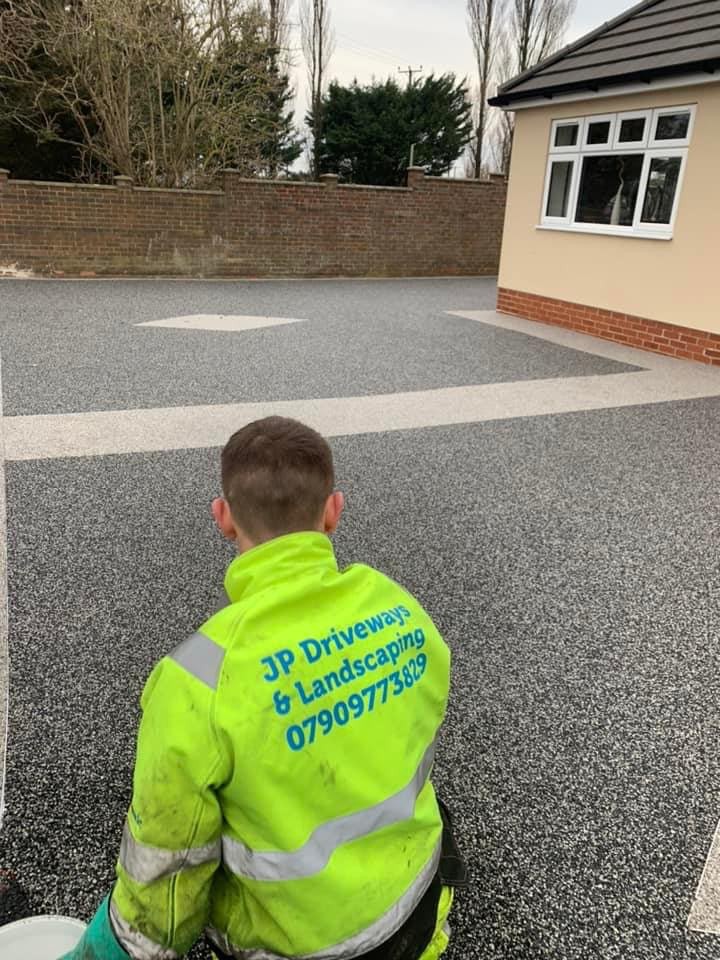
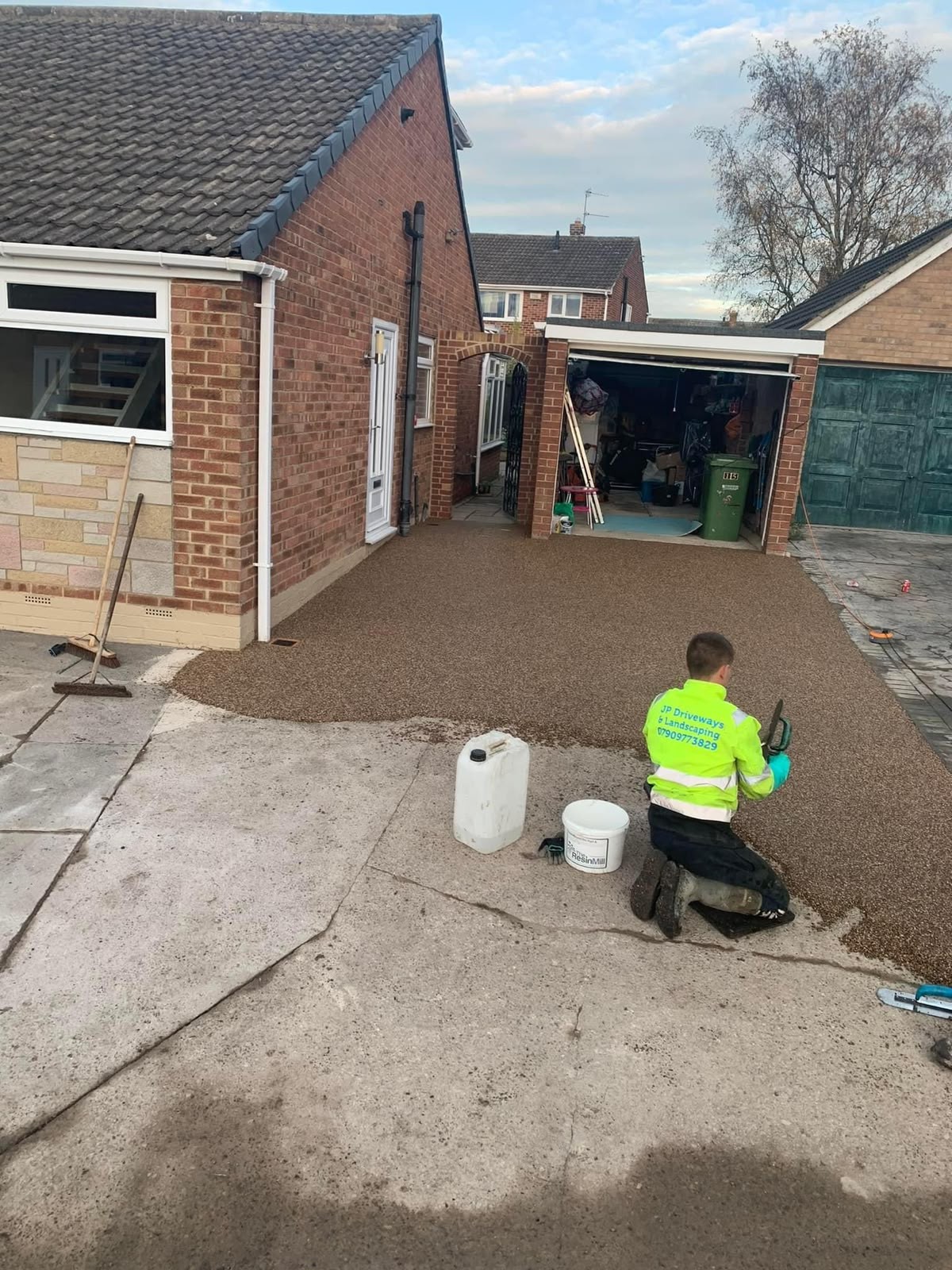
Aggregate and UV-stable resin are combined in a forced-action mixer to the correct ratio, then hand trowelled across the prepared area to an even thickness and finish.
- 06
Step 6 – Curing and final clean-down
The surface is left to cure undisturbed for the recommended period before use, and the site is cleaned down and walked through with you before we leave.
What you get
The difference a properly built job makes
Seamless finish with nothing to lift or shift
A single continuous surface means no individual units to sink, rock or lift out of line, and no joints for weeds to colonise.
Genuinely low maintenance day to day
There is no loose stone to rake and no jointing sand to top up: an occasional sweep and wash down keeps a resin bound driveway looking as it did on day one.
Permeable performance where it is needed
Water passes through a properly built resin bound surface into a permeable base below, which can help meet drainage or planning permeability requirements on new hard standing.
Smooth, safe underfoot for the whole household
The even, non-slip surface suits pushchairs, wheelchairs and anyone less steady on their feet far better than gravel or worn block paving.
Wide choice of finish without joints breaking up the design
A broad range of aggregate blends and colours means a resin bound driveway can be matched to brickwork, stone or existing landscaping without a pattern of joint lines interrupting it.
5 year workmanship guarantee and honest base advice
Every installation is covered by our 5 year workmanship guarantee, and we will always tell you plainly whether your existing base is suitable for an overlay or needs rebuilding first.
How resin bound systems are actually mixed and laid
Resin bound surfacing is produced by combining a measured aggregate blend with a UV-stable clear resin in a forced-action mixer, which coats every stone particle fully and evenly rather than simply gluing stones together at contact points as loose resin-bonded systems do. The fully coated mix is then transported to the prepared area and trowelled out by hand in a continuous pass, working to a consistent depth, typically around 15–18mm for a domestic driveway carrying vehicle traffic, thinner for pedestrian-only paths and patio surrounds. Getting the depth right matters: too thin and the surface is vulnerable to point loading and cracking under a car's weight; unnecessarily thick wastes material without adding meaningful strength once the correct depth has been achieved.
The trowelling stage is skilled work: the surface needs to be worked to a smooth, even finish while the resin is still workable, with attention paid to consistent texture across the whole area so there are no visibly different patches once it has cured. Weather plays a real part here too: resin bound systems need a reasonably dry, mild window to cure correctly, and installation is generally avoided in heavy rain or in temperatures that would either slow the cure excessively or cause it to set too fast to finish properly.
Base preparation: the difference between years and decades
For a new installation, the sub-base beneath resin bound needs to be permeable in its own right, typically an open-graded stone specified to allow water through into the ground or a connected drainage system, compacted in layers in the same way as any other driveway sub-base but using material selected for permeability rather than density alone. Skimping on this stage, or laying resin over ordinary impermeable hardcore, defeats the purpose of a permeable surface entirely, because water reaching the base has nowhere to go and simply sits there.
Where an existing tarmac or concrete driveway is being overlaid rather than replaced, the assessment stage is critical. We check for cracking, movement, ponding water and general structural soundness before recommending an overlay, and where the base does not meet that standard we say so directly rather than laying resin over a problem that will resurface, often literally, within a year or two. This is, in our experience, the single most common reason resin bound driveways fail early, and it is entirely avoidable with an honest assessment up front.
Aggregate choice, colour and blend options
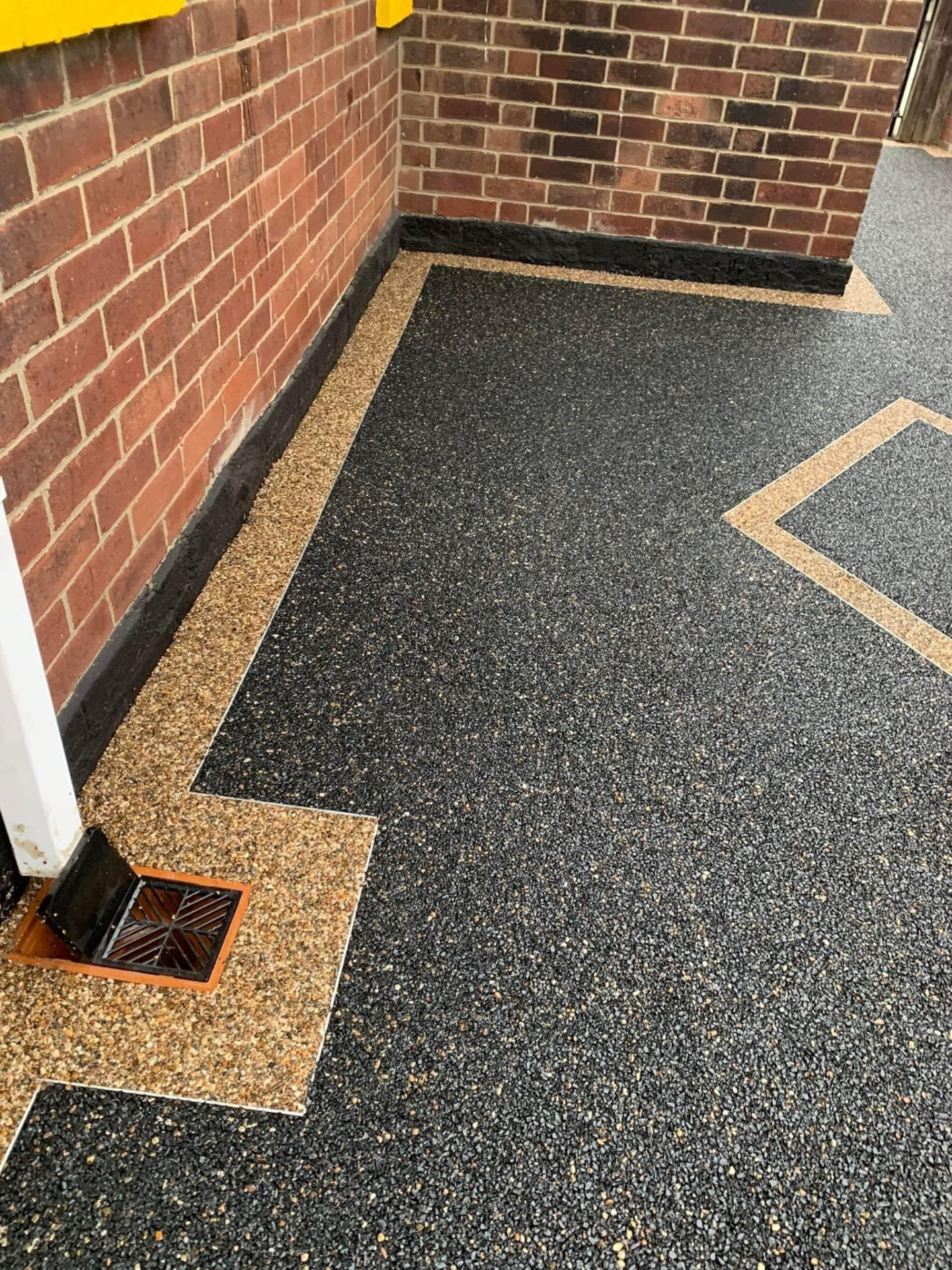
Aggregate blends range from natural quartz and gravel tones through to golds, greys, browns and mixed multi-colour finishes, and the choice affects both appearance and how well the surface hides everyday marks such as tyre scuffs or leaf staining. Lighter blends show contrast well against darker brickwork but can show general wear and staining more visibly over time; mid-tone and multi-coloured blends tend to be more forgiving for a driveway in daily use. We bring sample boards to site visits so the colour decision is made against your actual brickwork, render and existing landscaping rather than from a screen.
Residential driveways versus commercial and pedestrian applications
Vehicle-trafficked areas such as driveways need a thicker application, a stronger permeable sub-base and an aggregate blend suited to point loading from tyres, particularly at turning points near the garage or entrance. Pedestrian-only areas, paths, patio surrounds, pool surrounds, can be laid thinner and with a lighter base specification, which is worth knowing if a project mixes both a driveway and a connecting path, since specifying each correctly avoids paying for vehicle-grade construction where it is not needed.
Straight answers
Resin Bound questions
Get a free, written resin bound quote
Call 07909 773829 between 7am and 6pm, Monday to Saturday, or send us details and photos of your existing driveway and we will arrange a visit. You will receive an honest assessment of your base and a clear written quote with no obligation, and a 20% deposit secures your installation date.